
AI Search & GEO
What Is GEO? How to Optimize Your Brand for AI Search in 2026
GEO has a real academic origin and a real mechanism behind it — it's not just SEO with a new name. Here's what it actually is, and what Google itself says about optimizing for it.
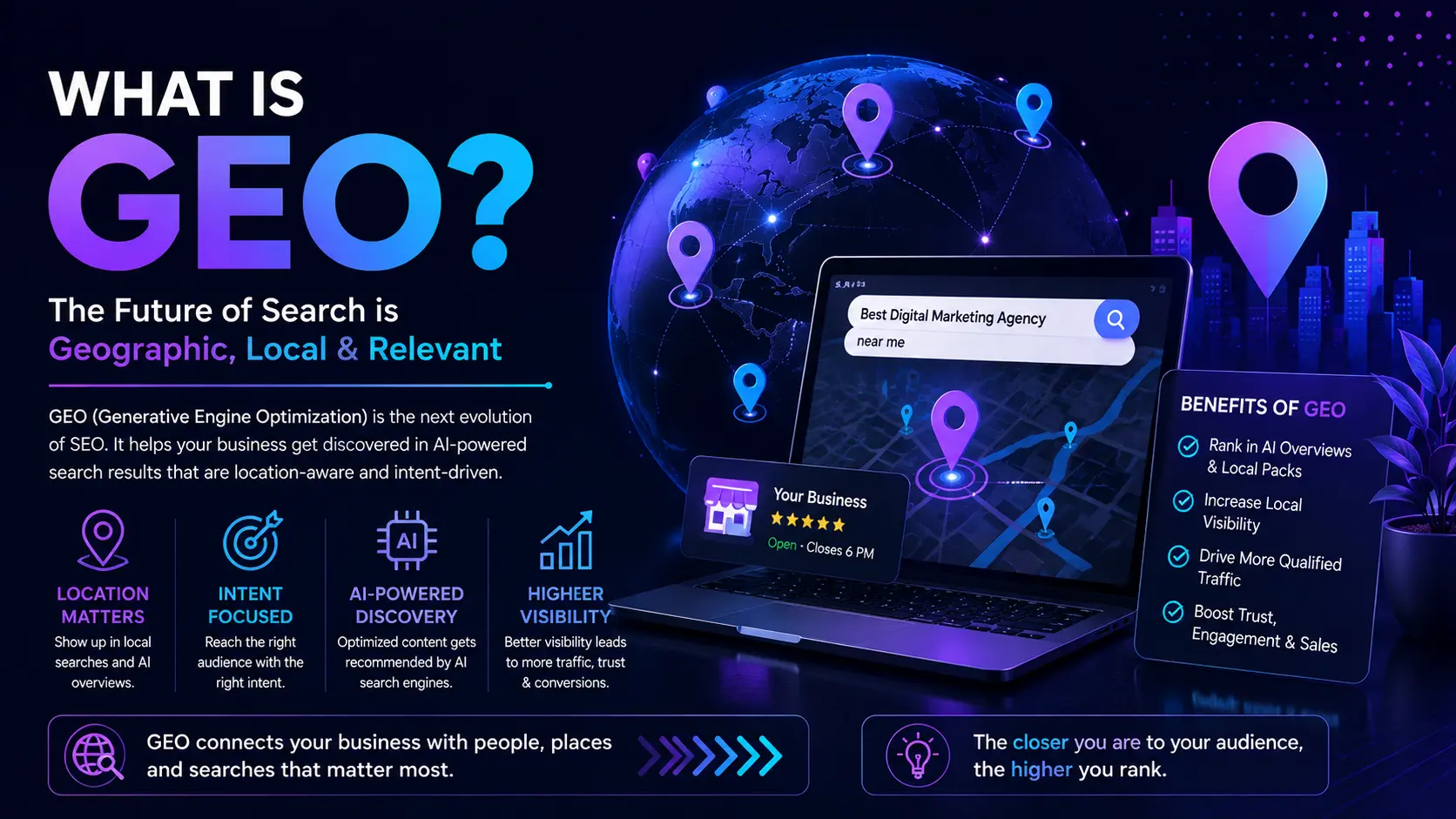
The short answer
GEO (Generative Engine Optimization) is the practice of structuring content so it’s more likely to be retrieved, cited, and referenced by AI systems like ChatGPT, Perplexity, and Google’s AI Overviews when they generate an answer. The term has a real, specific origin — it was formally introduced in a 2023 research paper (later published at KDD 2024, a major data mining research conference) that measured how specific content strategies could improve visibility inside AI-generated answers.
Here’s the honest complication: Google’s own documentation on AI features states plainly that there are no special additional requirements to appear in AI Overviews — the existing best practices for SEO remain what matters. So GEO is a real, distinct area of research, but for most businesses, it’s less a separate strategy and more a specific lens on doing content and SEO fundamentals well.
Where the term actually comes from
Unlike a lot of marketing terminology, GEO isn’t an agency invention — it comes from an actual academic study. Researchers built a benchmark of real user queries, tested specific content optimization strategies against how often that content got cited in generative AI answers, and found that certain approaches (adding statistics, citing sources, using clear quotations, and structuring content for easy extraction) meaningfully improved visibility, with effects varying significantly by topic domain.
That’s a useful detail, because it means GEO isn’t purely speculative — there’s a real, measured relationship between how content is structured and how likely it is to be pulled into an AI-generated answer.
How AI search actually retrieves and cites content
Generative answer engines generally follow a similar pattern, even though the specific implementation differs between ChatGPT, Perplexity, and Google’s AI Overviews:
- The query gets broken down. Complex questions are often split into smaller sub-questions the system searches for individually, rather than treated as one single query.
- Relevant content gets retrieved. The system pulls candidate sources from the web (or, for some systems, from a search index) that appear relevant to each sub-question.
- An answer gets synthesized. Rather than presenting a list of links, the system generates a direct answer, often citing or linking to a handful of the sources it drew from.
This is meaningfully different from traditional search, where a page either ranks in a list or it doesn’t. In AI search, a page can be perfectly relevant and still not get cited if a competing source answers the specific sub-question more directly or more extractably.
GEO vs. traditional SEO
| Traditional SEO | GEO | |
|---|---|---|
| Goal | Rank in a list of results | Get retrieved and cited inside a generated answer |
| Unit of competition | Whole pages, competing for a ranking position | Specific passages or facts, competing to answer a sub-query |
| Success signal | Position in search results, click-through | Citation or mention inside an AI-generated answer |
| What helps | Keyword relevance, authority, technical health | All of the above, plus extractable structure, clear direct answers, and credible sourcing |
| Measurability | Well-established tools and rank tracking | Still maturing — much harder to measure precisely today |
The overlap is bigger than the difference. Sites with strong SEO fundamentals — genuine expertise, clean technical structure, and content that directly answers real questions — tend to perform reasonably well in AI search without doing anything GEO-specific at all.
What actually helps AI systems retrieve and cite your content
Based on both the original GEO research and what’s structurally true about how these systems work:
- Answer the question directly and early. Systems retrieving content to answer a specific sub-query favor passages that state the answer clearly, rather than building up to it.
- Use clear, well-labeled structure. Headings, lists, and defined terms make content easier to extract accurately than dense, unstructured paragraphs.
- Cite real sources and include specific data. The original research found that adding statistics and citations measurably improved citation rates — content that shows its work is more attractive to systems trying to generate a trustworthy answer.
- Make entities and relationships explicit. Clearly naming what something is, who it’s for, and how it relates to other concepts helps systems parse and represent your content accurately.
- Keep content current. Stale or outdated information is less likely to be surfaced confidently by systems that weigh recency as a trust signal.
What GEO can’t promise
Be skeptical of anything claiming to guarantee AI citations or “rank #1 in ChatGPT.” No one outside the companies operating these systems has full visibility into exactly how sources get selected for a given answer, and the process is dynamic — the same query can surface different sources at different times. GEO can improve the odds that your content is retrievable and citable. It cannot guarantee inclusion, and any framework claiming otherwise is overstating what’s actually knowable.
How to start applying GEO principles
- Audit your existing content for extractability. Does each page answer its core question clearly within the first few sentences, or does it bury the answer?
- Add credible sourcing and specific data where you’re making a claim, rather than vague, unsupported statements.
- Make sure structured data is implemented correctly — it helps every retrieval system understand your content, AI or otherwise.
- Don’t abandon SEO fundamentals to chase GEO tactics. They’re not competing priorities; strong fundamentals are the foundation both are built on.
- Track what you can, honestly acknowledge what you can’t. Measurement tools for AI citation are still maturing — treat early data directionally, not as precise attribution.
Common mistakes businesses make with GEO
- Treating GEO as a total replacement for SEO, rather than an additional lens on the same underlying work.
- Chasing unverifiable claims about “AI ranking factors” from sources with no real basis for the claim.
- Ignoring content quality while optimizing structure, when structure without substance rarely gets cited by systems trying to generate a genuinely useful answer.
- Expecting precise measurement in a space where even the platforms building these systems are still refining how visibility works.
The bottom line
GEO is a real, research-backed concept — not marketing hype — but it’s not the wholesale reinvention of content strategy some framing suggests. The businesses seeing the most benefit are the ones already producing clear, well-sourced, genuinely useful content, because that’s exactly what both traditional search and AI systems are trying to reward. If you want to go deeper on the specific mechanics of getting mentioned by name in AI tools, that’s covered in our companion guide on getting your business mentioned in ChatGPT, AI Overviews, and Perplexity.
Frequently asked questions
Is GEO a real, separate discipline from SEO?
GEO has a real, specific origin — it was formally defined in a 2023 academic paper (published at KDD 2024) that measured how content visibility in AI-generated answers could be improved through specific optimization strategies. That said, Google's own documentation states there are no special additional requirements to appear in AI Overviews beyond standard SEO best practices. The honest answer is that GEO is a genuinely distinct area of study, but in practice it overlaps heavily with fundamentals that already make content good.
Can I guarantee my content gets cited by ChatGPT or AI Overviews?
No, and any guidance claiming to guarantee this should be treated with skepticism. AI systems select and synthesize sources dynamically based on the specific query, and no one outside the companies building these systems has full visibility into exactly how sources are chosen. What you can do is make your content more retrievable and citable — not guarantee inclusion.
Do I need to do GEO and SEO separately?
No — for almost every business, the same foundational work (clear structure, direct answers, credible sourcing, genuine expertise) supports both traditional rankings and AI citation. Treating them as two separate content strategies usually creates duplicate work without a proportional benefit.
Does structured data help with AI search visibility?
It helps AI systems (and traditional search) understand what your content is about and how entities relate to each other, which supports retrievability. It's not a guarantee of citation, but it's a low-cost, well-documented practice worth implementing regardless.
What's the biggest mistake businesses make with GEO?
Treating it as a completely separate strategy from content quality and SEO fundamentals — chasing GEO-specific tactics while neglecting clear writing, accurate information, and genuine topical depth almost always underperforms compared to simply producing better, more directly useful content in the first place.
More insights
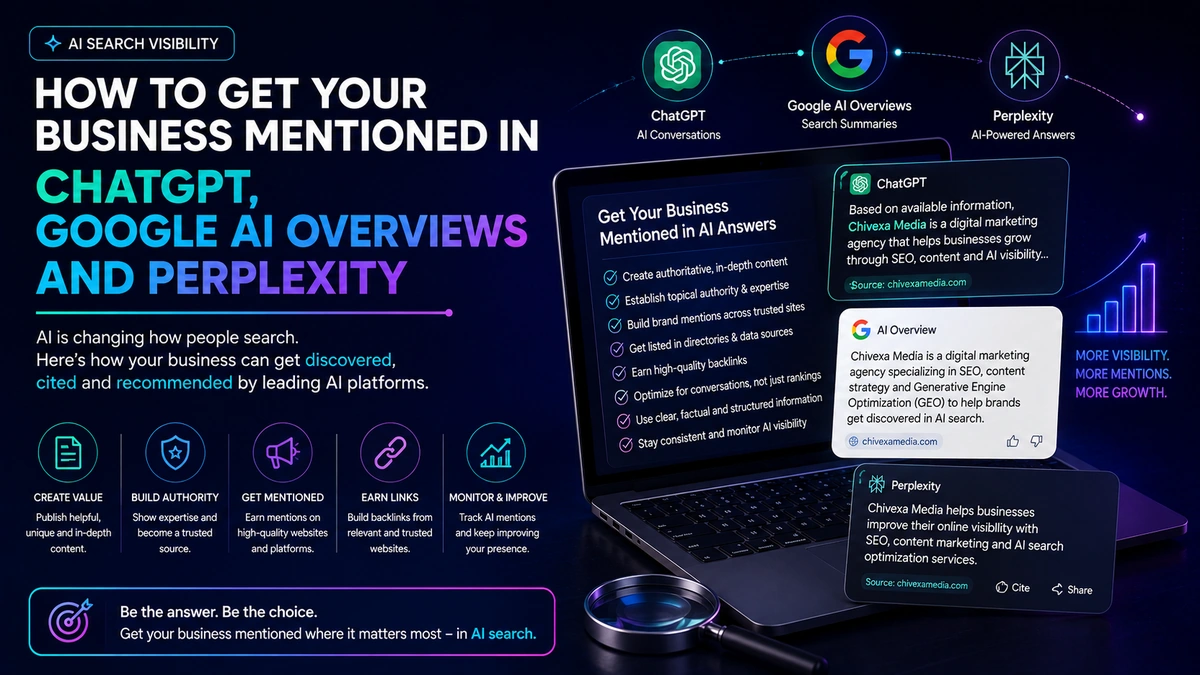
AI Search & GEO
How to Get Your Business Mentioned in ChatGPT, Google AI Overviews and Perplexity
There's no button that gets you mentioned by AI. But each of these systems does have a documented, understandable process for picking sources — and that process rewards a specific, learnable set of things.
Read Article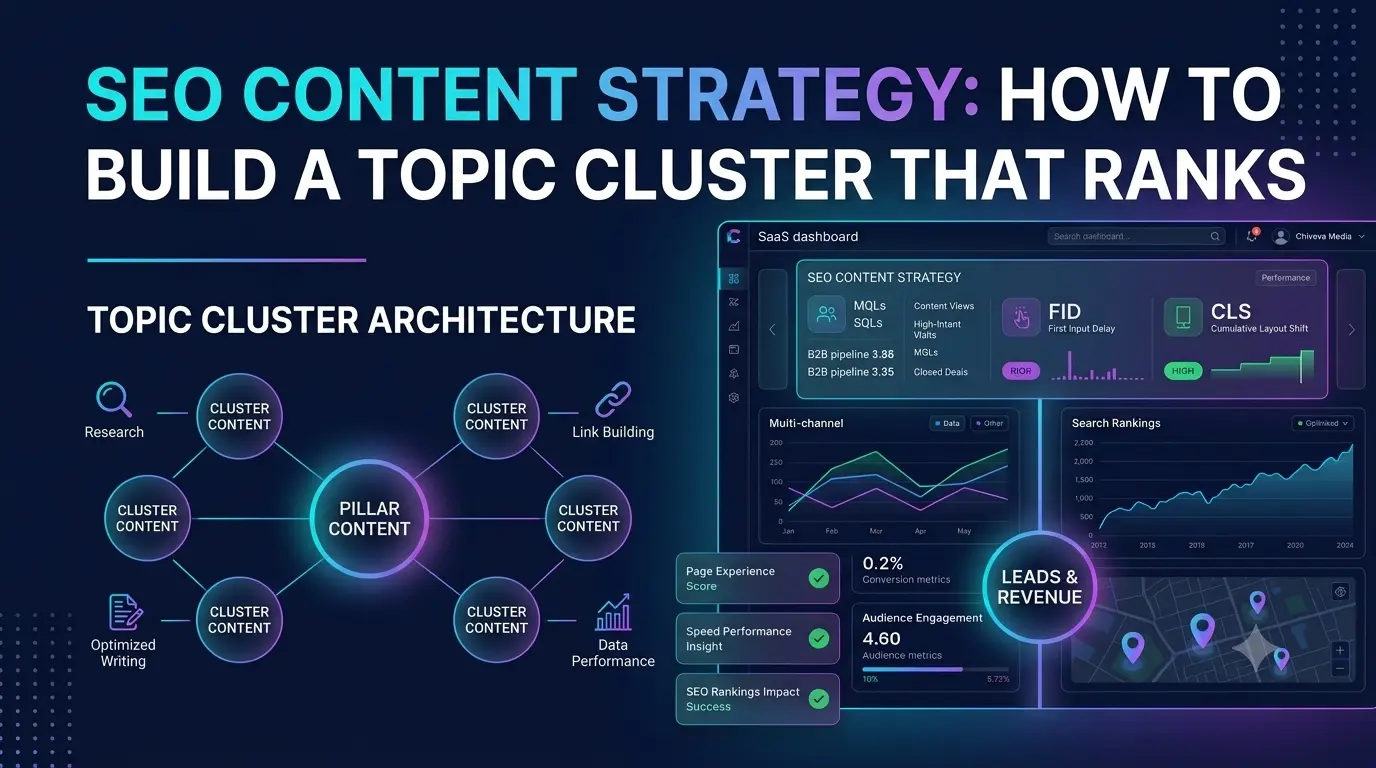
Content Marketing
SEO Content Strategy: How to Build a Topic Cluster That Ranks
A pile of disconnected blog posts and a genuine topic cluster can cover the exact same subjects — and perform completely differently in search.
Read Article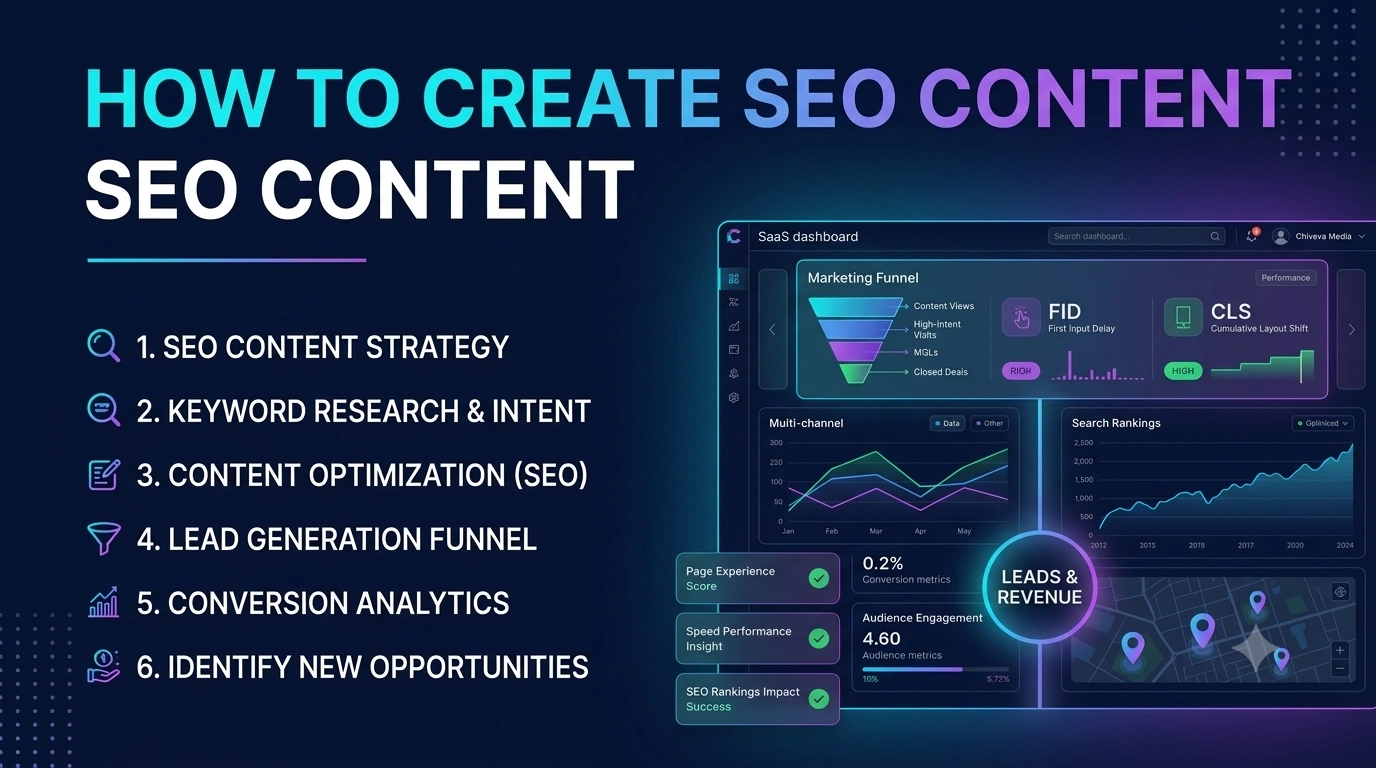
Content Marketing
How to Create SEO Content That Actually Generates Leads
A lot of SEO content ranks well and generates almost no business value. Here's the difference between content built to rank and content built to rank and convert.
Read Article