Digital Marketing Strategy
SEO vs Google Ads: Which Is Better for Business Growth in 2026?
SEO and Google Ads solve different problems. Here's how each one actually works, what it costs you in time versus budget, and a practical framework for deciding where to invest first.
The short answer
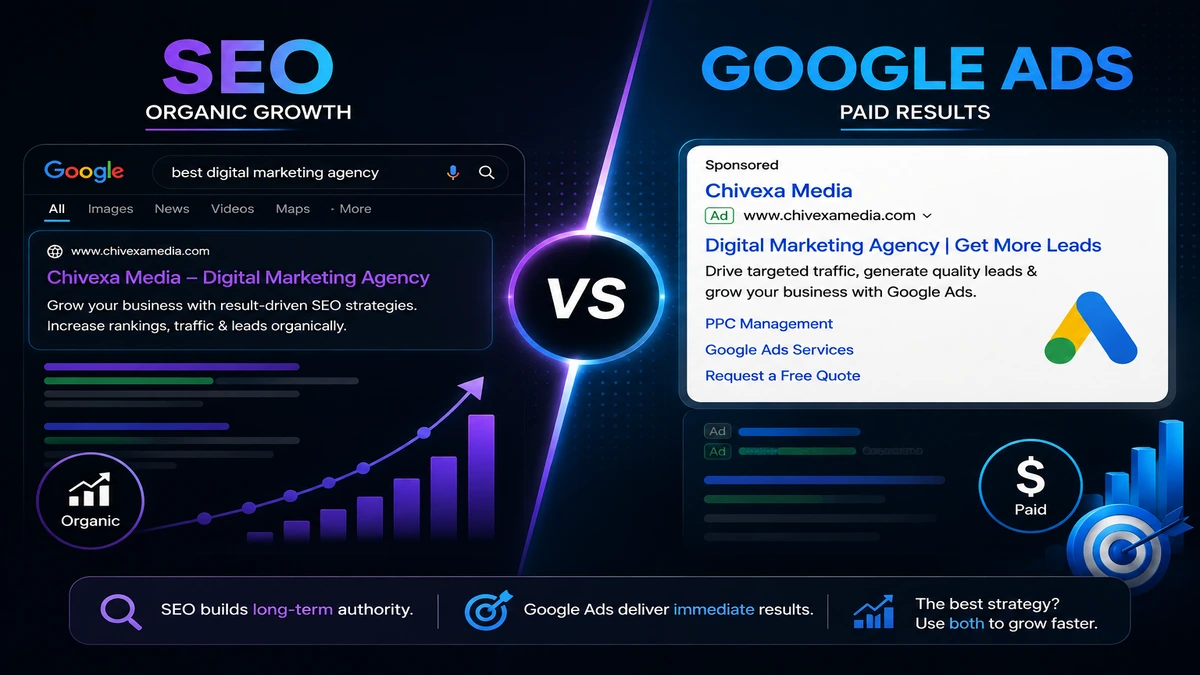
SEO and Google Ads aren’t really competing for the same job. Google Ads buys you a spot on the results page immediately, for as long as you keep paying for it. SEO earns you a spot on the results page over time, and you keep it without paying per click.
If you need leads this week, Google Ads is the faster path. If you’re building a business you expect to still be running in three years, SEO is the channel that keeps paying you back after the campaign ends. Most businesses that grow past their first year end up using both — just for different jobs.
The rest of this guide breaks down how each channel actually works, what they cost in real terms, and how to decide where to put your next marketing dollar.
What SEO actually is
SEO (search engine optimization) is the practice of improving a website so it appears in the organic — unpaid — results on a search engine results page. According to Google’s own SEO Starter Guide, ranking well involves making sure a site is crawlable and indexable, then giving Google (and users) clear signals about what the page is actually about and why it’s trustworthy.
In practice, SEO work falls into three buckets:
- Technical SEO — making sure Google can crawl, render, and index your pages correctly (site speed, mobile usability, structured data, clean URLs).
- On-page SEO — the content and structure of individual pages: keyword relevance, headings, internal links, and how clearly a page answers the query it targets.
- Off-page SEO — signals outside your own site that build authority, most commonly backlinks from other credible sites.
None of this is instant. Google has to discover your pages, understand them, and build enough confidence in them relative to competing pages before it ranks them well. That process is why SEO is described as a compounding channel — the work you do this quarter keeps producing traffic well after you’ve moved on to the next project.
What Google Ads actually is
Google Ads is a pay-per-click (PPC) advertising platform. You bid on keywords, and when someone searches one of those terms, your ad enters a real-time auction against other advertisers targeting the same keyword. Per Google Ads Help’s definition of cost-per-click, in most campaign types you’re only charged when someone actually clicks your ad — not simply for it being shown.
Where your ad lands isn’t decided by bid alone. Google’s Quality Score system factors in expected click-through rate, ad relevance, and landing page experience — which is why a well-targeted, well-built ad can outrank a competitor bidding more but offering a worse experience.
The practical effect: Google Ads gives you control that SEO can’t. You choose the exact keywords, the exact audience, the exact budget, and the exact moment your ad starts and stops showing. That control comes at a direct, ongoing cost — the day you stop paying is the day the traffic stops.
SEO vs Google Ads: side-by-side comparison
| SEO | Google Ads | |
|---|---|---|
| Cost model | No per-click cost, but requires ongoing investment in content, technical fixes, and time | Pay-per-click; cost scales directly with traffic volume |
| Time to results | Typically weeks to months before meaningful traffic | Can generate clicks the same day a campaign launches |
| Traffic after you stop investing | Continues, though it can decline gradually without upkeep | Stops almost immediately when the budget runs out |
| Control over placement | Indirect — Google decides ranking based on relevance and authority signals | Direct — you set the keyword, bid, audience, and schedule |
| Best for | Long-term, compounding visibility and lower cost-per-lead over time | Immediate visibility, testing offers, and time-sensitive campaigns |
| Trust signal to users | Often perceived as more credible, since the placement was “earned” | Clearly labeled as an ad, which some users skip |
| Scalability | Limited by how much content/authority work you can realistically produce | Scalable almost instantly by increasing budget, within auction limits |
When SEO is the better choice
SEO tends to be the stronger primary investment when:
- You’re playing a long game. If you expect to still be marketing this business in two or three years, the organic rankings you build now keep working without an ongoing per-click bill.
- Your category has expensive clicks. In competitive, high-value industries — legal services and certain B2B software categories are common examples — cost-per-click can get high enough that ranking organically for the same terms becomes the more sustainable path.
- You want durable trust, not just traffic. Organic rankings tend to compound: better content earns more links and engagement, which supports better rankings, which earns more traffic — a cycle that paid ads don’t build on their own.
- You have more time than budget. SEO requires real work, but it doesn’t require a daily media spend to keep functioning.
When Google Ads is the better choice
Google Ads tends to be the stronger primary investment when:
- You need leads now, not in six months. A new business with no existing rankings can’t out-wait a competitor that’s already ranking — Ads gives you a way to compete immediately.
- You’re testing an offer or landing page. Paid traffic is the fastest way to get real user data on whether a message, price point, or page actually converts, before you invest in ranking it.
- You’re running something time-bound. Seasonal promotions, product launches, and limited-time offers often finish before organic rankings would have had time to build.
- You’re recovering from a traffic drop. If an algorithm update or a technical issue just cut your organic traffic, Ads can cover the gap while the underlying SEO problem gets fixed.
Why most growing businesses eventually run both
Treating SEO and Google Ads as an either/or decision usually costs businesses more than it saves. A more resilient approach:
- Use Google Ads to validate demand. Paid campaigns tell you quickly which keywords and offers actually convert — data you can then feed into your SEO content plan instead of guessing.
- Let SEO take over proven keywords. Once you rank organically for a term you were previously paying for, you can often reduce or drop the paid spend on that specific keyword and redirect the budget elsewhere.
- Keep Ads running on your most competitive, highest-intent terms. Some keywords are worth defending with both an ad and an organic listing, since together they take up more space on the results page.
- Let SEO carry the long tail. The hundreds of smaller, less competitive questions your audience searches are rarely worth bidding on individually — that’s exactly the kind of coverage organic content is built for.
This is also where reporting matters: without tracking which channel is actually producing qualified leads (not just clicks), it’s easy to keep paying for traffic that SEO could deliver for free, or to under-invest in content that would have outperformed an ad. If you’re not sure what a reasonable spend looks like on either side, our guide to digital marketing costs breaks down realistic ranges before you commit more budget to either channel.
A simple framework for deciding where to invest first
Ask these four questions in order:
- Do I need revenue in the next 30–60 days? If yes, put meaningful budget into Google Ads now. SEO can start in parallel, but it won’t rescue a short-term cash need.
- Is my average customer value high enough to absorb a high cost-per-click? If your margins can’t support the CPCs in your category, SEO needs to be the primary channel, even if it’s slower.
- Do I have the capacity to produce genuinely useful content consistently? SEO rewards sites that keep publishing and improving. If that capacity doesn’t exist yet, Ads will outperform SEO until it does.
- What does my competitive landscape look like on the results page? If competitors already dominate both the ads and the organic results for your core terms, you likely need a combined strategy rather than picking one.
How the decision plays out by business type
The right starting channel also depends heavily on what kind of business you’re running. A few common patterns:
Local service businesses (contractors, clinics, law firms, home services) usually see the fastest return by running Google Ads immediately for high-intent, “near me” and emergency-style searches, while building local SEO and a strong Google Business Profile in parallel. Local intent searches convert quickly, and the paid/organic combination tends to dominate the map pack and results page together.
B2B and SaaS companies often lean more heavily on SEO earlier, because sales cycles are longer and the highest-value keywords (comparison terms, “best X software,” implementation guides) tend to have expensive CPCs relative to a single conversion. Ads still play a role for bottom-funnel terms and retargeting, but content and organic authority usually carry more of the pipeline over time.
E-commerce businesses typically need both running simultaneously from day one — Shopping and Search campaigns for immediate transactional intent, and SEO for category and product-page visibility that reduces dependency on rising CPCs during peak seasons.
New businesses with no existing traffic almost always need Ads in the first few months, simply because there’s no organic footprint yet for Google to rank. SEO work should start on day one regardless — it just won’t produce meaningful traffic until the site earns enough authority and content depth to compete.
Common mistakes businesses make choosing between the two
- Judging SEO on a 30-day timeline. SEO is a compounding channel — expecting Ads-level speed from it leads to abandoning strategies right before they’d have started working. See our guide on how long SEO actually takes to work for a realistic, month-by-month breakdown.
- Turning off Ads the moment organic traffic appears. A little organic traffic doesn’t mean you’ve replaced your paid pipeline yet — cut spend gradually as rankings prove durable, not all at once.
- Sending paid traffic to a page that was never built to convert. A high click-through rate on an ad means nothing if the landing page doesn’t clearly answer the query and prompt an action.
- Treating both channels as separate teams with separate goals. The keyword and conversion data from Ads should directly inform your SEO content plan, and vice versa — run them as one strategy, not two.
The bottom line
SEO and Google Ads aren’t rivals — they’re tools built for different timelines. Google Ads buys attention now. SEO builds an asset that keeps generating attention without a recurring bill. The businesses that grow fastest usually aren’t the ones that pick a side; they’re the ones that know which channel to lean on at which stage, and how to make the data from one improve the other.
If you’re not sure where your business sits on that decision right now, that’s exactly the kind of question worth working through with a digital marketing strategy built around your actual budget, timeline, and category — not a generic template.
Frequently asked questions
Should I start with SEO or Google Ads?
If you need leads within days and have budget to spend, start with Google Ads while SEO builds in the background. If you have more time than budget, or you're in a category where clicks are expensive, prioritize SEO. Most businesses eventually run both — they solve different problems rather than competing for the same one.
Is SEO cheaper than Google Ads?
SEO has no per-click cost, but it isn't free — it requires ongoing investment in content, technical work, and time before it produces traffic. Google Ads has a direct, immediate cost per click that stops the moment you stop paying. Which is 'cheaper' depends on your time horizon: SEO tends to cost less per lead over 12+ months, while Google Ads costs more per lead but delivers results starting immediately.
Can I do SEO and Google Ads at the same time?
Yes, and for most competitive categories it's the stronger approach. Google Ads can generate leads immediately while your SEO investment compounds in the background. Once organic rankings mature, many businesses reduce ad spend on the keywords they now rank for and redirect that budget toward keywords or campaigns SEO can't reach as quickly.
Does running Google Ads help my SEO rankings?
Google has stated that ad spend does not directly influence organic rankings — the two systems are separate. Indirectly, Google Ads can support SEO by validating which keywords actually convert, which then informs your organic content strategy, and by keeping traffic flowing to a new site while it builds the organic authority needed to rank.
Which converts better, SEO traffic or Google Ads traffic?
It depends on intent, not the channel itself. A visitor who clicks a paid ad and a visitor who clicks an organic result for the same high-intent search query tend to convert similarly, because they're searching for the same thing. The bigger driver of conversion rate is usually landing page relevance and page experience, not whether the click was organic or paid.
More insights
Digital Marketing Strategy
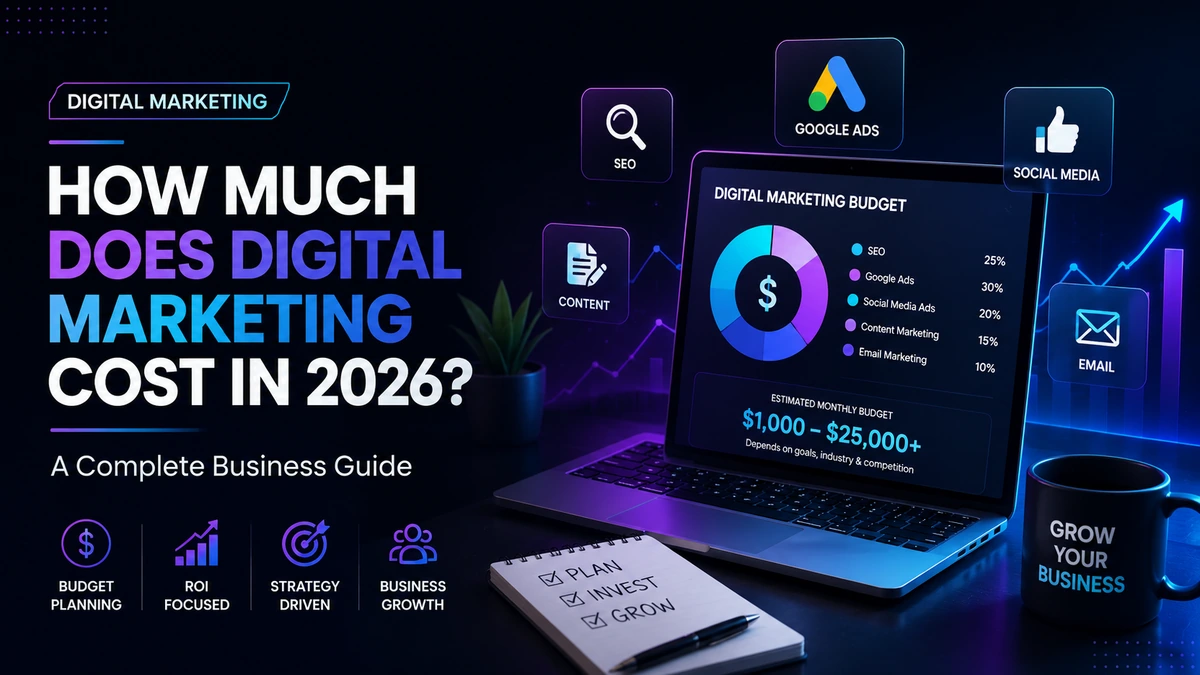
How Much Does Digital Marketing Cost in 2026? A Complete Business Guide
Digital marketing costs vary more than almost any other business expense, because the number depends less on the channel and more on your goals, competition, and stage. Here's how to actually budget for it.
Read Article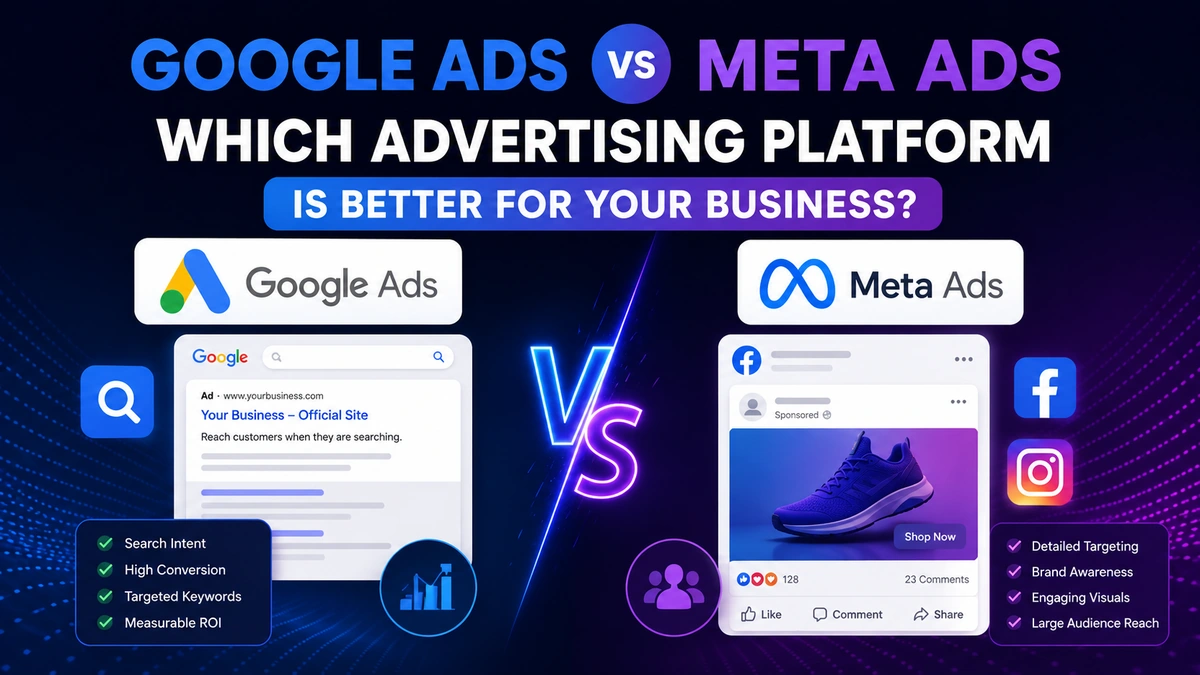
Paid Advertising
Google Ads vs Meta Ads: Which Advertising Platform Is Better for Your Business?
Google Ads catches people already searching for a solution. Meta Ads reaches people who aren't searching yet. Here's what that difference actually means for your budget.
Read Article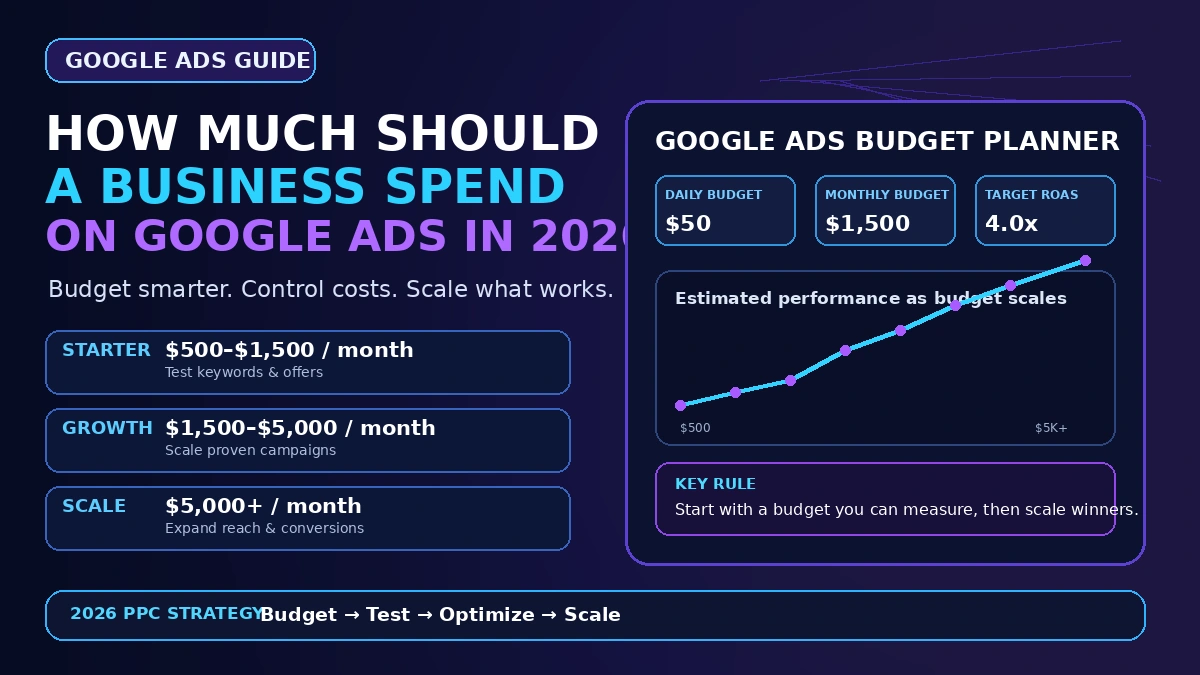
Paid Advertising
How Much Should a Business Spend on Google Ads in 2026?
Anyone who gives you a single dollar figure without knowing your industry, margins, and goals is guessing. Here's how to actually calculate a Google Ads budget that makes sense for your business.
Read Article