
AI Search & GEO
How to Get Your Business Mentioned in ChatGPT, Google AI Overviews and Perplexity
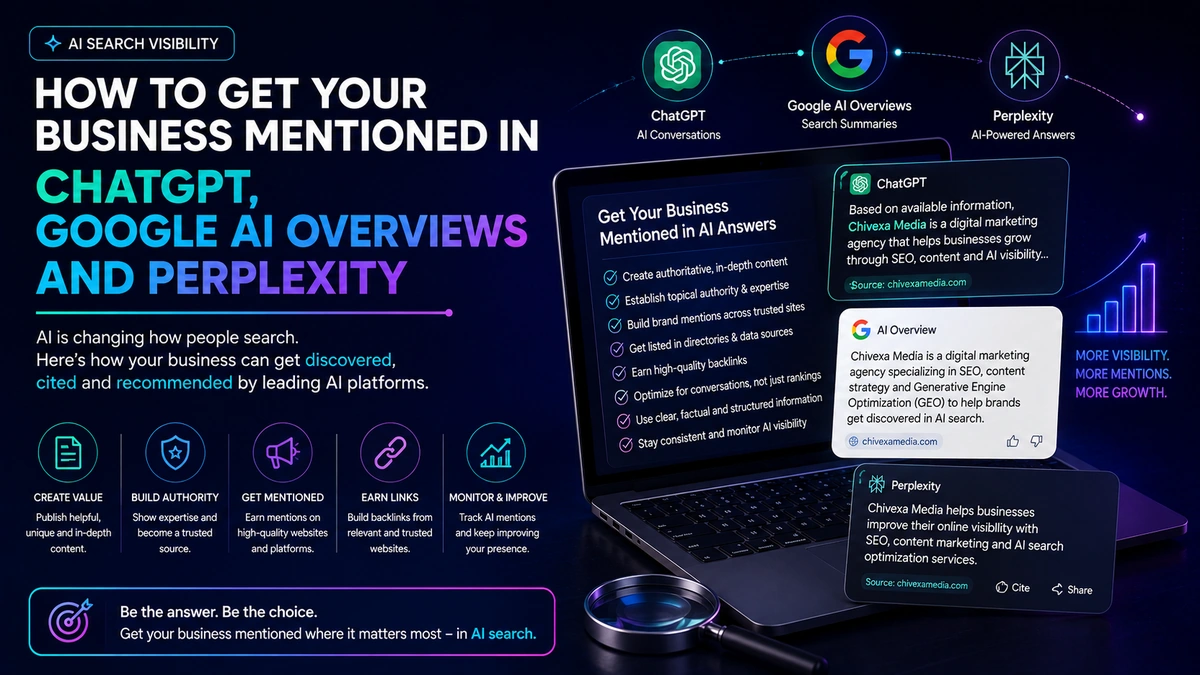
There's no button that gets you mentioned by AI. But each of these systems does have a documented, understandable process for picking sources — and that process rewards a specific, learnable set of things.
The short answer
There’s no submission form, ad product, or paid placement that guarantees your business gets mentioned by ChatGPT, Perplexity, or Google’s AI Overviews. What actually exists is a documented (if evolving) retrieval process behind each system, and that process consistently rewards the same handful of things: content that answers a question directly, comes from a source the system can verify as credible, and is structured clearly enough to extract accurately. Get those right and your odds of being retrieved and cited improve — nothing about it is guaranteed, and anyone promising otherwise is overstating what’s actually knowable.
How each system actually picks sources
The mechanics differ slightly by platform, but they’re publicly documented rather than mysterious.
ChatGPT search. According to OpenAI’s own help documentation, when a query would benefit from current web information, ChatGPT converts it into one or more search queries, retrieves results, and generates a response with inline citations users can click through to the original source. OpenAI’s announcement of the feature describes the same retrieve-then-synthesize pattern — the model isn’t picking from a static list, it’s actively searching at the moment you ask.
Perplexity. Per Perplexity’s own Help Center, the system searches the web in real time, gathers information from what it describes as authoritative sources, and compiles a coherent answer with numbered citations users can verify. Perplexity also labels certain cited domains as Government, Academic, or Trusted based on its own source-review process — a rare case of a platform being explicit about weighting source credibility.
Google AI Overviews. Google’s official documentation states there are no special, separate requirements to appear in AI Overviews beyond standard SEO best practices — the same signals that support traditional ranking (relevance, quality, technical health) are what AI Overviews draw on.
What’s actually common across all three
Strip away the platform-specific detail and the same pattern shows up everywhere:
| Step | What happens |
|---|---|
| 1. Query understanding | The system interprets what’s actually being asked, often breaking complex questions into smaller parts |
| 2. Retrieval | It searches the live web (or a search index) for candidate sources relevant to the question |
| 3. Evaluation | Candidate sources are assessed for relevance, credibility, and how clearly the answer can be extracted |
| 4. Synthesis | A direct answer is generated, drawing from and citing a handful of the strongest sources |
None of these systems maintain a fixed leaderboard the way traditional search rankings do. A source can be cited for one query and absent for a nearly identical one, because retrieval happens fresh, dynamically, each time.
What genuinely improves your odds
Based on what these platforms have actually documented about their own process — not speculation:
- Answer the specific question clearly and early. Systems retrieving content to answer a sub-query favor passages that state the answer directly rather than building up to it over several paragraphs.
- Make your expertise and identity verifiable. Author bylines, a real about page, and genuine credentials all support the credibility evaluation every one of these systems performs in some form.
- Cite your own sources and data. Content that shows its work — real statistics, named studies, direct quotations — is easier for a synthesis system to trust and extract accurately than unsupported claims.
- Use structured data correctly. Google’s structured data guidelines exist specifically to help systems understand what your content is and how it’s organized — useful for traditional search and a reasonable assist for AI retrieval too.
- Keep information current. Outdated pages are a weaker retrieval candidate for any system trying to generate a confidently accurate answer right now.
- Build genuine third-party credibility. Perplexity’s explicit trust labeling shows that at least one major platform directly weighs source reputation — something built through real coverage and citations elsewhere, not shortcuts.
What doesn’t work (and what to be skeptical of)
- Paid “AI SEO” placement services. None of these three platforms offer a documented, official paid mechanism for guaranteed citation. Treat any vendor claiming otherwise with real skepticism.
- Keyword-stuffing for “AI ranking factors.” No credible platform documentation describes anything resembling classic keyword density as a citation factor.
- Chasing citations while ignoring content quality. Every official source above points back to the same fundamentals — clear, credible, well-structured content — rather than a separate AI-specific trick.
- Expecting a stable, trackable position. Because retrieval is dynamic, tools claiming to show a precise, stable “AI ranking” for your brand should be read directionally, not as ground truth.
How to actually start
- Pick a handful of real questions your customers ask and make sure at least one page on your site answers each one directly, near the top of the page.
- Add genuine sourcing — data, named studies, direct quotes — anywhere you’re making a factual claim.
- Implement structured data correctly using Google’s guidelines as the baseline, since it benefits both traditional and AI-driven retrieval.
- Invest in real third-party credibility (press, partnerships, genuine expert bylines) rather than manufactured signals.
- Keep your most important pages updated rather than letting cornerstone content go stale.
This is the same foundation covered in our guide to what GEO actually is — getting mentioned by AI systems isn’t a separate discipline from doing SEO and content well, it’s largely the same work applied with an eye toward how these newer systems retrieve and evaluate sources.
The bottom line
Every documented source above — OpenAI’s own help center, Perplexity’s own help center, and Google’s own search documentation — describes the same underlying pattern: retrieve, evaluate credibility and clarity, then synthesize. There’s no shortcut around that process, and no legitimate paid way to skip it. The businesses most likely to show up in these answers are the ones already doing clear, well-sourced, genuinely useful content work — the same businesses that tend to do well in traditional search, too.
Frequently asked questions
Can I pay to get mentioned in ChatGPT or Google AI Overviews?
No — there is currently no official paid placement mechanism for citations inside ChatGPT search results, Perplexity answers, or Google AI Overviews. Any service claiming to guarantee a paid or guaranteed mention in these systems is not describing a real, documented product from these companies.
Is getting mentioned in AI search the same as ranking #1 on Google?
No. Traditional ranking is about position in a list of links. Being cited in an AI-generated answer is a separate, dynamic selection process — a page can rank well in traditional search and still not get cited in an AI answer, or vice versa, because the systems are solving different problems.
Does having a Wikipedia page or press coverage help?
It can help indirectly. Systems like Perplexity explicitly label some sources as more trusted based on their review process, and broader digital PR and credible third-party coverage generally strengthens the authority signals these systems and traditional search both consider — but it's not a direct or guaranteed path to citation.
How long does it take to start showing up in AI search results?
There's no fixed timeline, and it varies by platform, topic, and how much authoritative content already exists on your subject. Since these systems retrieve and re-generate answers dynamically rather than maintaining a fixed index position, visibility can also fluctuate query to query rather than settling into a stable, trackable rank the way traditional SEO does.
Should I write content specifically 'for AI' instead of for readers?
No. Every documented mechanism across ChatGPT, Perplexity, and Google's own guidance points toward the same thing: clear, direct, well-sourced content written for a human reader is also the content these systems are built to retrieve and trust. Writing artificially for an algorithm instead of a reader tends to produce worse outcomes on both fronts.
More insights
AI Search & GEO
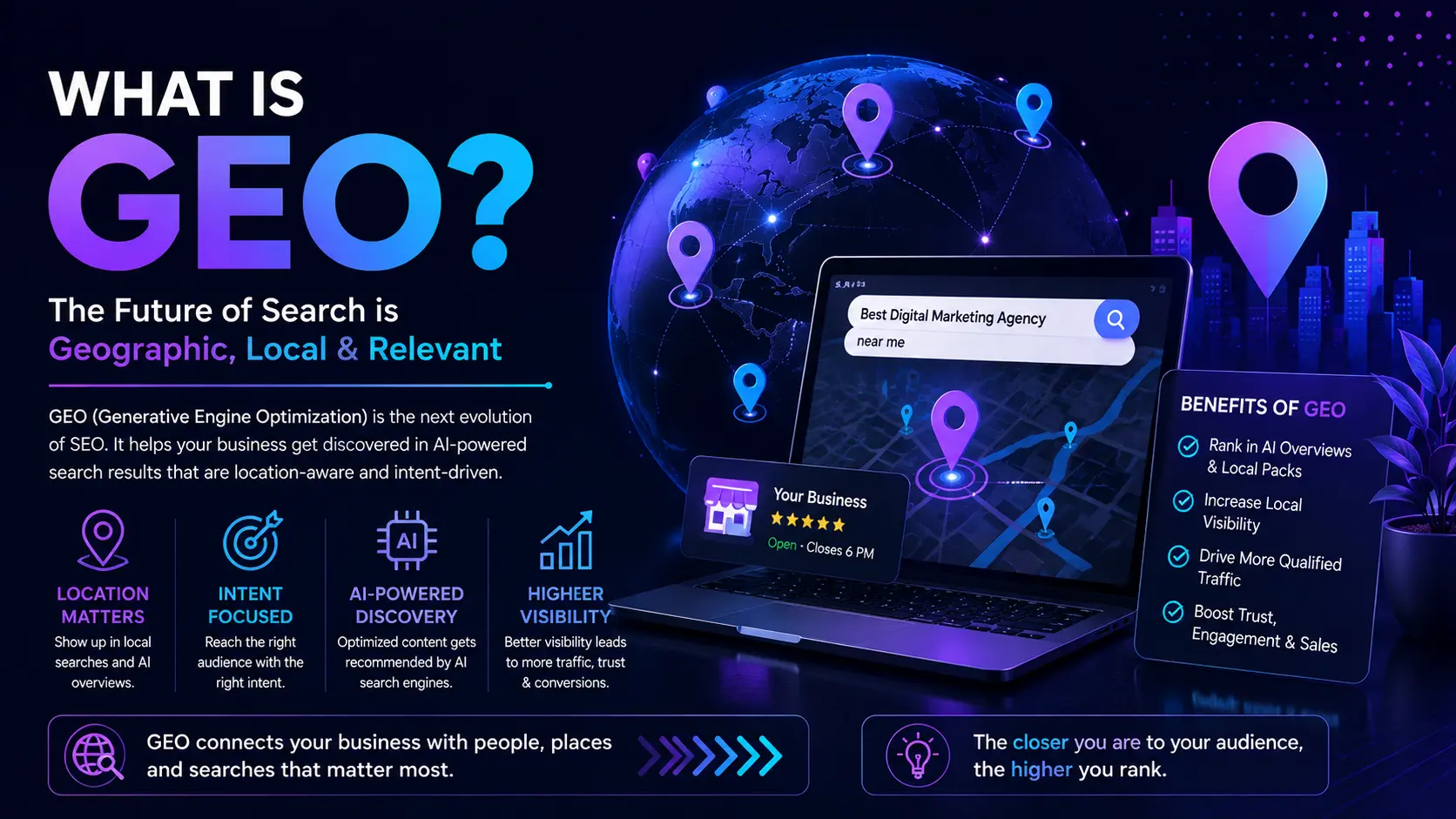
What Is GEO? How to Optimize Your Brand for AI Search in 2026
GEO has a real academic origin and a real mechanism behind it — it's not just SEO with a new name. Here's what it actually is, and what Google itself says about optimizing for it.
Read Article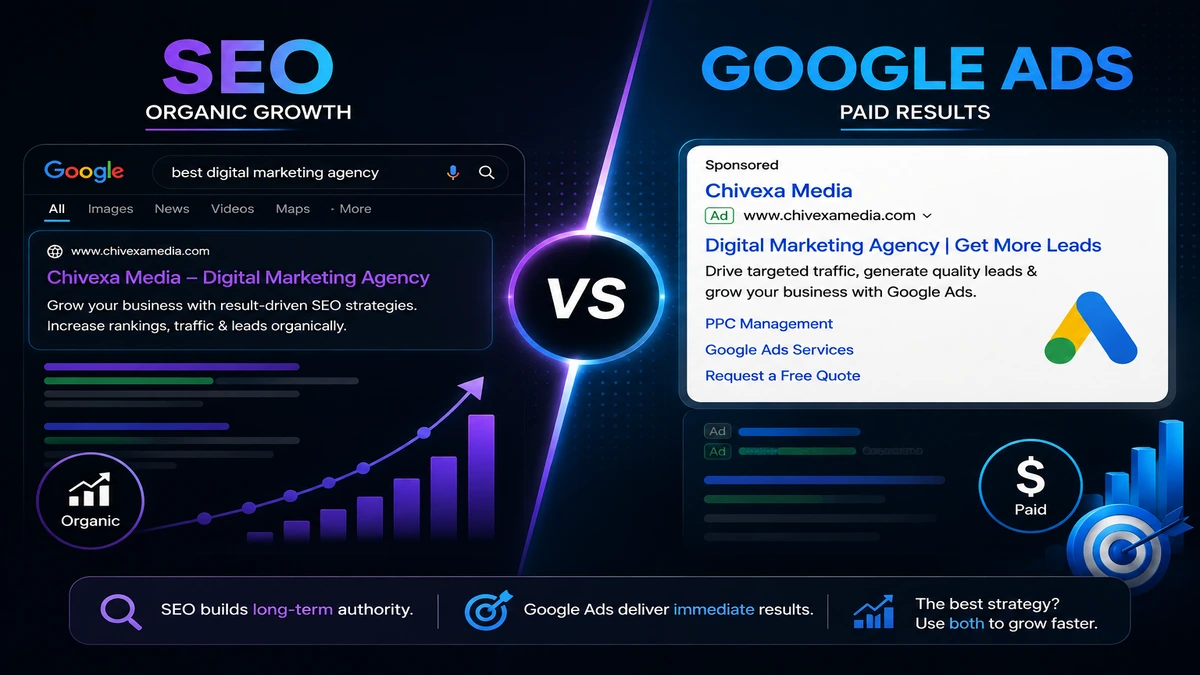
Digital Marketing Strategy
SEO vs Google Ads: Which Is Better for Business Growth in 2026?
SEO and Google Ads solve different problems. Here's how each one actually works, what it costs you in time versus budget, and a practical framework for deciding where to invest first.
Read Article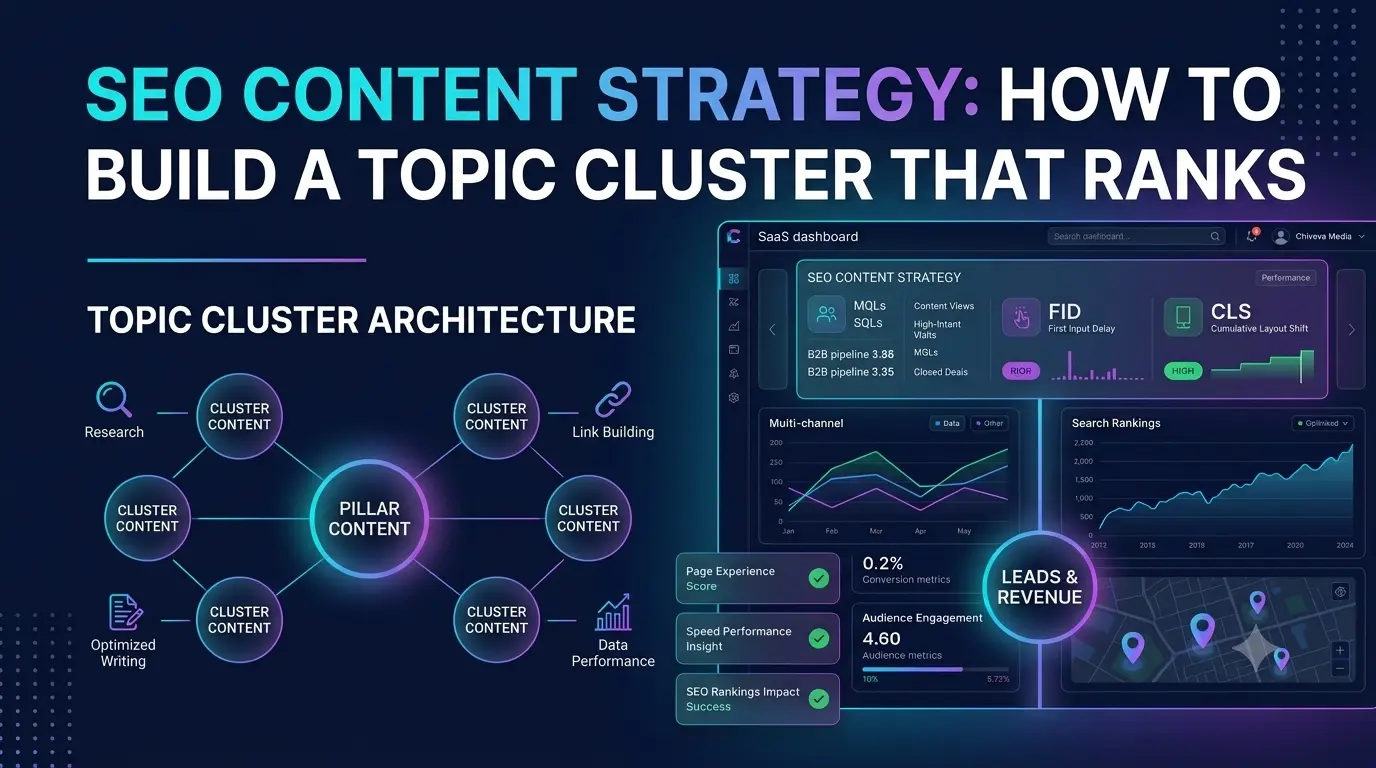
Content Marketing
SEO Content Strategy: How to Build a Topic Cluster That Ranks
A pile of disconnected blog posts and a genuine topic cluster can cover the exact same subjects — and perform completely differently in search.
Read Article