
SEO
How Long Does SEO Take to Work? Realistic SEO Timelines for Businesses
Google's own guidance puts SEO results at four months to a year. Here's what actually happens in that window, month by month, and how to know if it's working.
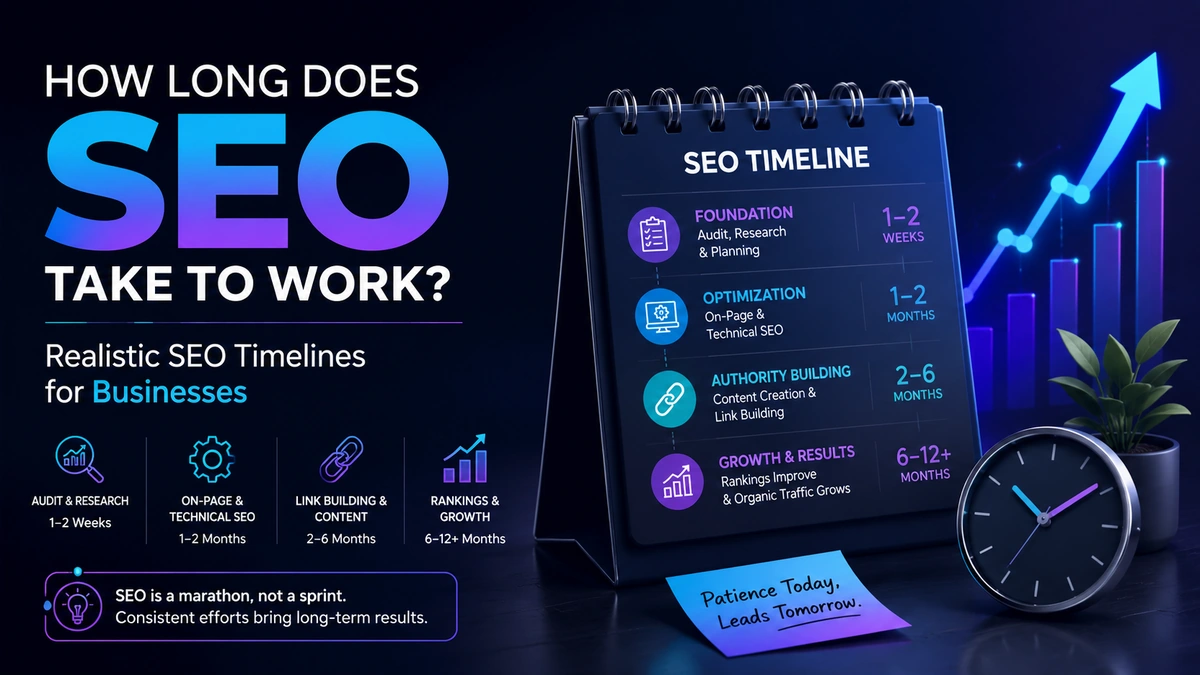
The short answer
Google’s own guidance — given directly by a Google Developer Programs Tech Lead in an official video on hiring an SEO, and still cited as accurate today by publications like Search Engine Land — is that businesses should expect four months to a year to implement SEO improvements and see the potential benefit. Some early signals show up sooner; meaningful ranking and traffic growth almost always takes longer than most businesses initially expect.
The rest of this guide breaks that window down month by month, so “it takes time” turns into an actual timeline you can plan around.
Why SEO takes time at all
SEO isn’t slow because of inefficiency — it’s slow because of how search engines actually work. Per Google’s SEO Starter Guide, a page has to be crawled, indexed, and then evaluated relative to every other page competing for the same query before it can rank well. Each of those steps takes real time, and for anything but the least competitive terms, being indexed is only the starting line, not the finish.
On top of that mechanical delay, competitive rankings are relative — a page doesn’t just need to be good, it needs to be evaluated as better than what currently occupies the results page, which for popular topics may already be well-established, frequently-updated, heavily-linked content.
A realistic month-by-month timeline
| Timeframe | What typically happens |
|---|---|
| Weeks 1–4 | Technical fixes and foundational work (indexing issues, site structure, initial content) are implemented. Some pages get crawled and indexed for the first time. |
| Months 1–3 | Impressions in Search Console start increasing for a wider range of keywords, even if click-through and rankings are still modest. This is the “green shoots” stage — activity, not yet results. |
| Months 3–6 | Rankings for less competitive keywords start moving up meaningfully. Traffic growth becomes noticeable, though top rankings for the most competitive, highest-value terms are usually still out of reach. |
| Months 6–12 | This is where most businesses see the results they were originally hoping for — established rankings across a meaningful set of keywords, and organic traffic becoming a real, measurable contributor to leads. |
| 12+ months | Results compound. Content published earlier continues gaining authority, and the cost of maintaining rankings is typically lower than the cost of building them, since the foundational trust has already been established. |
Factors that speed up or slow down results
- Domain age and existing authority. An established site with some existing trust generally sees results faster than a brand-new domain starting from zero.
- Competitiveness of the target keywords. Ranking for a specific, low-competition local term can happen much faster than ranking for a broad, high-volume commercial term with dozens of established competitors.
- How much technical debt exists at the start. A site with significant indexing or crawlability problems needs those fixed before any content work can show results — which effectively adds time before the clock really starts.
- Consistency of execution. SEO that’s actively worked on every month compounds meaningfully faster than SEO that gets attention in bursts with long gaps in between.
- Content depth and quality. Thin, generic content extends the timeline; genuinely useful, well-researched content tends to earn trust and links faster.
What “on track” actually looks like at each checkpoint
Numbers help make this concrete. These aren’t guarantees — competitive category and starting point both shift the specifics — but they’re a reasonable pattern for a site that’s executing consistently:
- By week 4: technical issues identified in an initial audit are resolved, and any previously un-indexed priority pages are confirmed indexed in Search Console.
- By month 3: organic impressions have grown noticeably compared to the starting baseline, and the site is ranking somewhere on page one or two for at least a handful of lower-competition, long-tail terms.
- By month 6: a meaningful set of target keywords show real ranking movement, and organic traffic is a visible, trackable line on the analytics dashboard rather than background noise.
- By month 12: organic search is contributing a measurable share of leads or revenue, and the cost of maintaining current rankings is noticeably lower than the effort it took to build them.
If a site is significantly behind this pattern at a given checkpoint despite consistent execution, that’s worth investigating specifically, rather than assuming more time alone will fix it.
Early progress vs. a real problem
It’s easy to mistake normal early-stage SEO for something not working. A few signals that things are on track, even without ranking wins yet:
- Search Console shows increasing impressions, even if clicks are still low.
- New content is actually being indexed within a reasonable window of publishing.
- Rankings are appearing for long-tail, lower-competition terms, even if the primary keywords aren’t there yet.
If those leading indicators are flat or absent for several months, that’s a different situation — worth working through why a site might not be ranking at all rather than simply waiting longer.
How to set expectations internally
If you’re managing this timeline for a business (not just yourself), a few things make the conversation easier:
- Set expectations before starting, using ranges, not deadlines. “Meaningful results in 4–12 months” is honest. “Results in 60 days” sets up a conversation you’ll regret having in month three.
- Track leading indicators monthly, not just final outcomes. Impressions, indexing status, and content output are visible early; rankings and revenue lag behind them.
- Revisit the plan at the 90-day mark, not to judge final success, but to confirm the leading indicators are moving — that’s the actual checkpoint that matters this early.
- Compare progress against a realistic timeline, not against how fast a paid campaign could move — see our comparison of SEO against Google Ads if that comparison keeps coming up in internal conversations.
Common mistakes businesses make with SEO timelines
- Judging success by rankings alone in month one or two, before there’s been enough time for Google to fully evaluate the changes.
- Stopping investment right before the payoff, often around month three or four, which is typically when the compounding effects are just starting to show.
- Comparing SEO timelines to paid media timelines, and concluding SEO “isn’t working” because it doesn’t move at the same speed — they’re fundamentally different mechanisms.
- Not tracking leading indicators, which means the only visible signal is the lagging one (rankings/traffic), making the entire early period feel like a black box.
The bottom line
Four months to a year isn’t a vague guess — it’s Google’s own stated expectation, and it holds up because it reflects how search engines actually evaluate and rank content. The businesses that get the best return from SEO are usually the ones that plan around that timeline from the start, track the right early signals, and stay consistent through the months where nothing dramatic seems to be happening yet. If you want a realistic timeline specific to your site and industry rather than a general range, that’s exactly the kind of assessment an SEO team can put together before you commit to anything.
Frequently asked questions
How long does SEO take to work, according to Google?
Google's own guidance, given by then-Google Developer Programs Tech Lead Maile Ohye in an official Google video on hiring an SEO, is that businesses should expect four months to a year to implement improvements and see the potential benefit. That range still holds up as a realistic expectation.
Why does SEO take so much longer than Google Ads?
Google Ads buys placement directly through an auction, so visibility can start the moment a campaign launches. SEO has to earn placement by being crawled, indexed, and evaluated as trustworthy and relevant relative to every other page competing for the same query — a process that takes real time regardless of how well the work is done.
Can SEO ever work faster than a few months?
Early technical fixes (resolving indexing issues, fixing crawl errors) can sometimes produce visible improvement within weeks, especially if the site had a significant blocking problem. But ranking improvements for competitive, high-value keywords almost always follow the longer four-months-to-a-year pattern, even when the technical foundation is solid from day one.
How do I know if my SEO isn't working, versus it just being early?
Check the leading indicators first — is the site being indexed, are impressions in Search Console increasing, is content actually being published on schedule? If those are moving in the right direction, it's likely just early. If indexing is stalled, impressions are flat for months, or nothing has actually been implemented, that's a real problem worth investigating rather than more patience.
Does a new website take longer to rank than an established one?
Generally yes. A brand-new domain has no history, no backlink profile, and no track record for Google to evaluate, so it typically takes longer to build the trust needed to rank for competitive terms compared to an established site making improvements to existing, already-indexed pages.
More insights
Digital Marketing Strategy
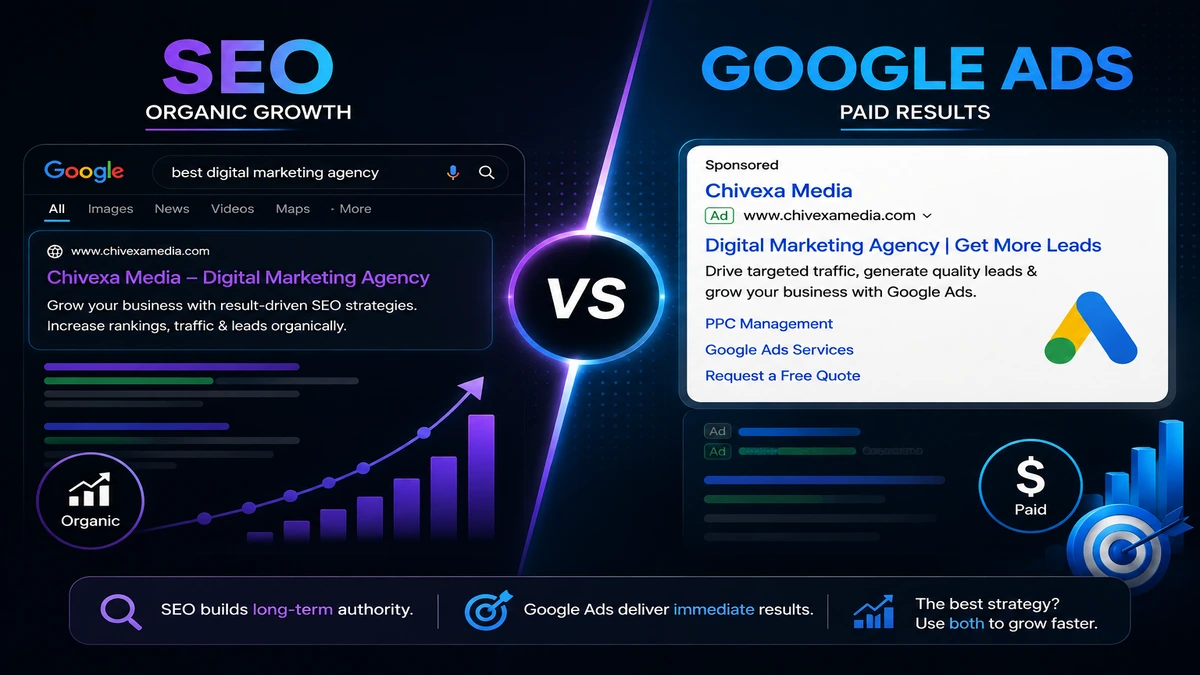
SEO vs Google Ads: Which Is Better for Business Growth in 2026?
SEO and Google Ads solve different problems. Here's how each one actually works, what it costs you in time versus budget, and a practical framework for deciding where to invest first.
Read Article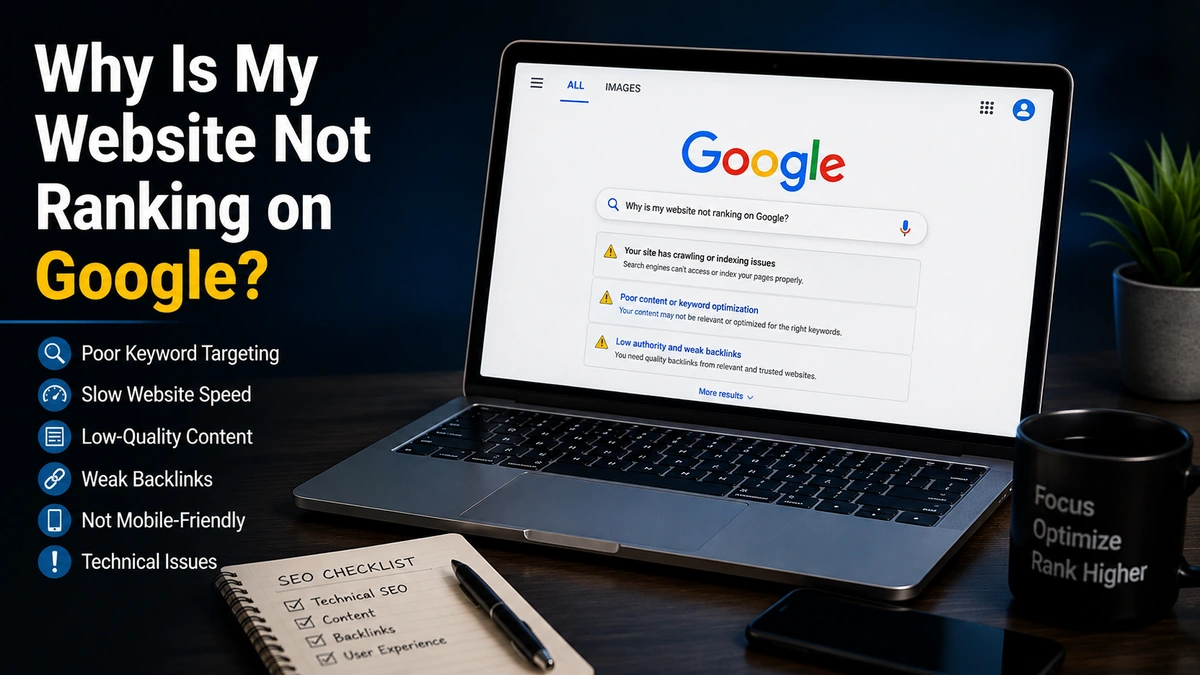
SEO
Why Is My Website Not Ranking on Google? 15 Common SEO Problems
"We're not ranking" is rarely one problem. It's usually one of about fifteen specific, diagnosable issues — and most of them are easier to identify than business owners expect.
Read Article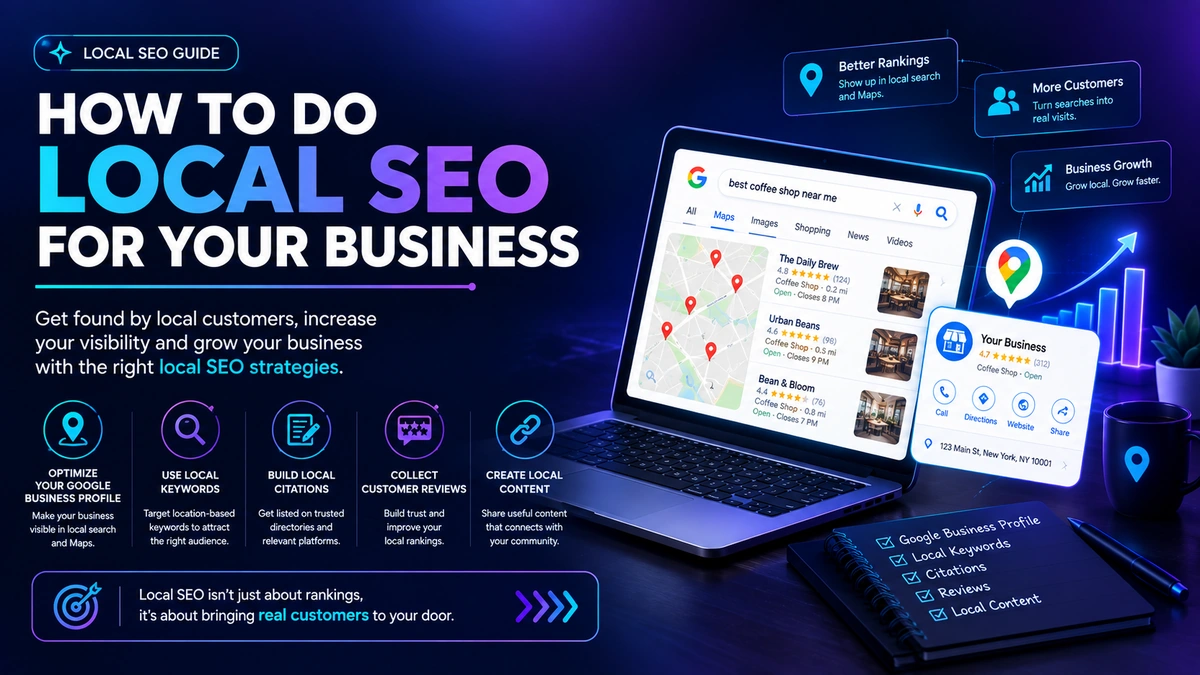
SEO
SEO for Small Businesses: A Practical Strategy to Get More Customers From Google
Small business SEO doesn't need to be complicated, but it does need to be sequenced correctly. Here's what to do first, second, and third — and what to skip.
Read Article