
SEO
SEO for Small Businesses: A Practical Strategy to Get More Customers From Google
Small business SEO doesn't need to be complicated, but it does need to be sequenced correctly. Here's what to do first, second, and third — and what to skip.
The short answer
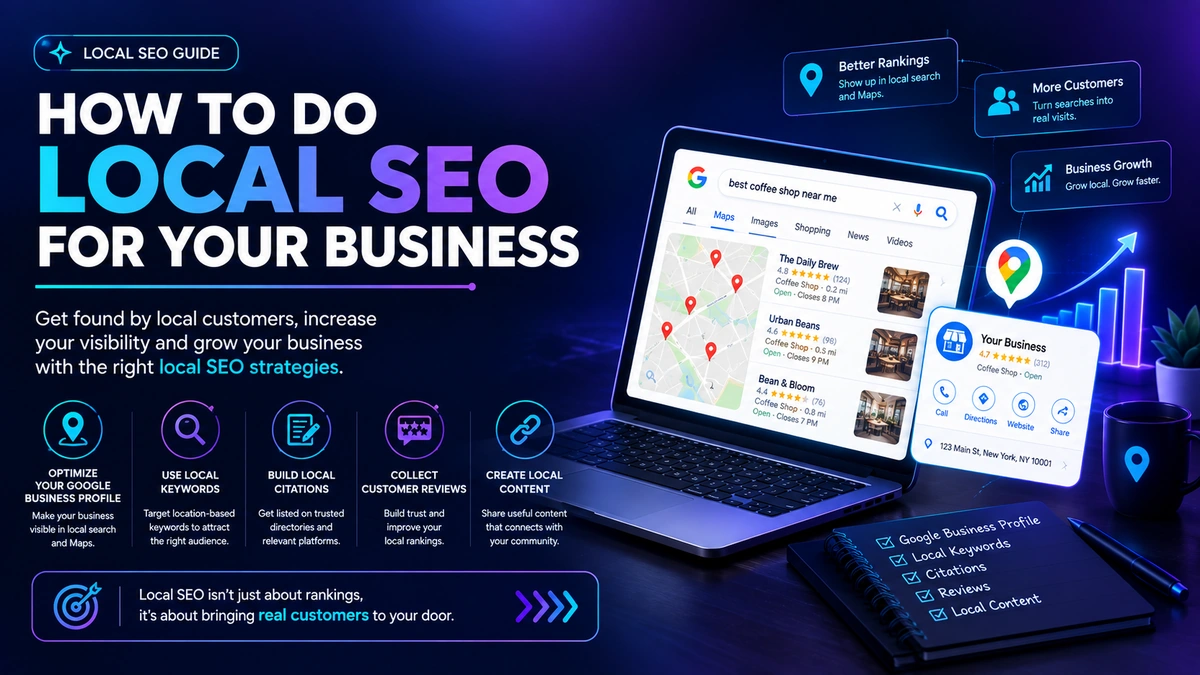
Small business SEO works best as a sequence, not a checklist you tackle all at once: get your Google Business Profile fully optimized first, make sure each core service or product has its own clear page, build genuine local relevance and reviews, and only then invest heavily in blog content and link building. Businesses that skip straight to content or backlinks while their Business Profile is half-finished or their service pages are thin usually see disappointing results relative to the effort.
Step 1: Get your Google Business Profile right
For any business with a physical location or a defined service area, this is usually the single highest-leverage SEO action available. According to Google’s own Business Profile Help Center, local rankings come down to three factors: relevance (how well your profile matches the search), distance (how close you are to the searcher), and prominence (how well-known and well-reviewed your business is).
Practically, that means:
- Fill out every section completely — categories, services, hours, attributes, and business description.
- Use your real business name only (no keyword-stuffed variations, which violates Google’s guidelines).
- Add real photos regularly, not just at setup.
- Respond to every review, positive or negative.
- Post updates periodically to show the profile is active.
Step 2: Make sure every core service has its own page
A single “Services” page trying to cover everything you do is harder for Google — and for customers — to match against a specific search. If you offer five distinct services, each deserves its own page that answers what it is, who it’s for, and why someone should choose you, written in plain language rather than vague marketing copy.
Step 3: Build genuine local relevance
- Consistent business information across your website, Google Business Profile, and any directories you’re listed in — inconsistent names, addresses, or phone numbers actively hurt local trust signals.
- Location-specific content where it’s genuinely relevant (a real service area, not a fabricated list of cities you don’t actually serve).
- Real customer reviews, collected consistently rather than in occasional bursts, since prominence is explicitly tied to review volume and quality.
Step 4: Follow SEO fundamentals on the technical and content side
Once the local and on-page basics are solid, Google’s SEO Starter Guide covers the foundational technical and content practices that apply to every site — clean site structure, fast load times, mobile usability, descriptive titles and headings, and content that genuinely answers what a searcher is looking for.
A realistic priority order
| Priority | Action | Why it comes first |
|---|---|---|
| 1 | Google Business Profile | Directly tied to local visibility, fastest to improve |
| 2 | Core service/product pages | These convert visitors, not just attract them |
| 3 | Reviews and local consistency | Builds prominence, the hardest factor to fake |
| 4 | Technical SEO health | Removes friction that undermines everything else |
| 5 | Blog and content | Builds long-term authority once the foundation is solid |
This isn’t the only order that can work, but skipping straight to step 5 while steps 1–3 are neglected is one of the most common reasons small business SEO underperforms — a problem covered in more depth in our guide to why a website isn’t ranking on Google.
Common mistakes small businesses make
- Treating SEO as a one-time project. Reviews, freshness, and competitor activity all shift over time — SEO needs ongoing attention, not a single setup pass. How long SEO actually takes to show results is worth reading before setting expectations.
- Writing thin, generic service pages. A page that could describe any business in your industry doesn’t help you stand out to Google or to customers.
- Ignoring reviews. Prominence is an explicit ranking factor, and reviews are one of the clearest signals of it.
- Skipping a basic SEO audit. Technical problems — broken pages, slow load times, missing metadata — can undercut every other effort. A step-by-step SEO audit checklist is a reasonable place to start.
The bottom line
Small business SEO doesn’t require a huge budget or an in-house specialist to get meaningfully better results — it requires doing the highest-leverage things first. Start with your Google Business Profile, make sure your service pages are genuinely clear and specific, build real local credibility through reviews, and only then move into broader content and technical investment. Businesses that follow that order tend to see steadier, more durable growth than those chasing tactics out of sequence.
Frequently asked questions
Is SEO worth it for a small business with a limited budget?
For most small businesses with a physical location or defined local service area, yes — SEO targets people already searching for what you offer, which tends to convert better than interruption-based advertising. That said, it's not instant, so it works best paired with a realistic timeline rather than expected to replace all other marketing immediately.
Can I do SEO myself without hiring an agency?
Yes, especially early on. Claiming and optimizing your Google Business Profile, writing clear service pages, and collecting genuine reviews are all things a business owner can do directly. As competition in your market and the technical complexity of your site grow, outside expertise typically becomes more valuable.
How is small business SEO different from enterprise SEO?
The fundamentals are the same, but priority order differs. Small, local businesses usually get more return from Google Business Profile optimization and a handful of clear, well-written service pages than from the large-scale technical and content programs that matter more for enterprise sites competing nationally.
Do I need a blog for small business SEO to work?
Not necessarily. A blog helps you rank for informational questions and build topical authority over time, but it's not the first priority. A small business with poor service-page copy or an incomplete Google Business Profile will usually get more value fixing those first.
How many keywords should a small business target?
Fewer, more specific keywords tied directly to your actual services and location almost always outperform trying to rank broadly for a large number of generic terms, especially early on when your site has limited authority.
More insights
SEO
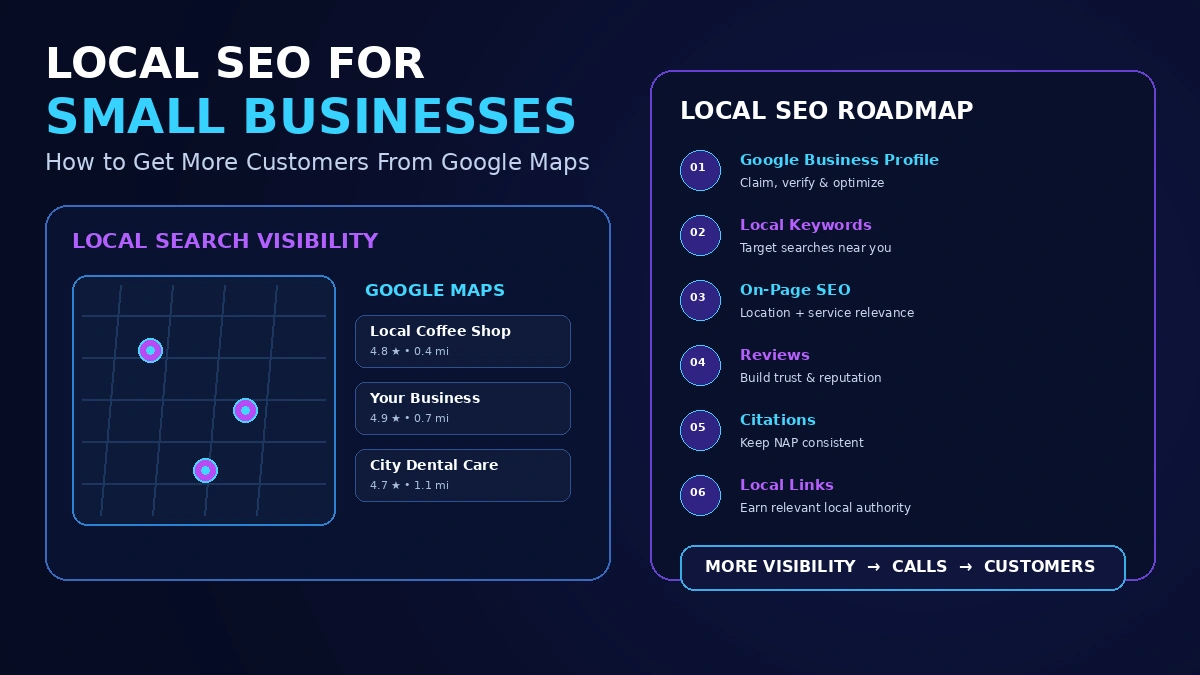
Local SEO for Small Businesses: How to Get More Customers From Google Maps
Most local businesses lose customers to competitors not because they're worse — but because they're less visible in the exact moment someone nearby is searching.
Read Article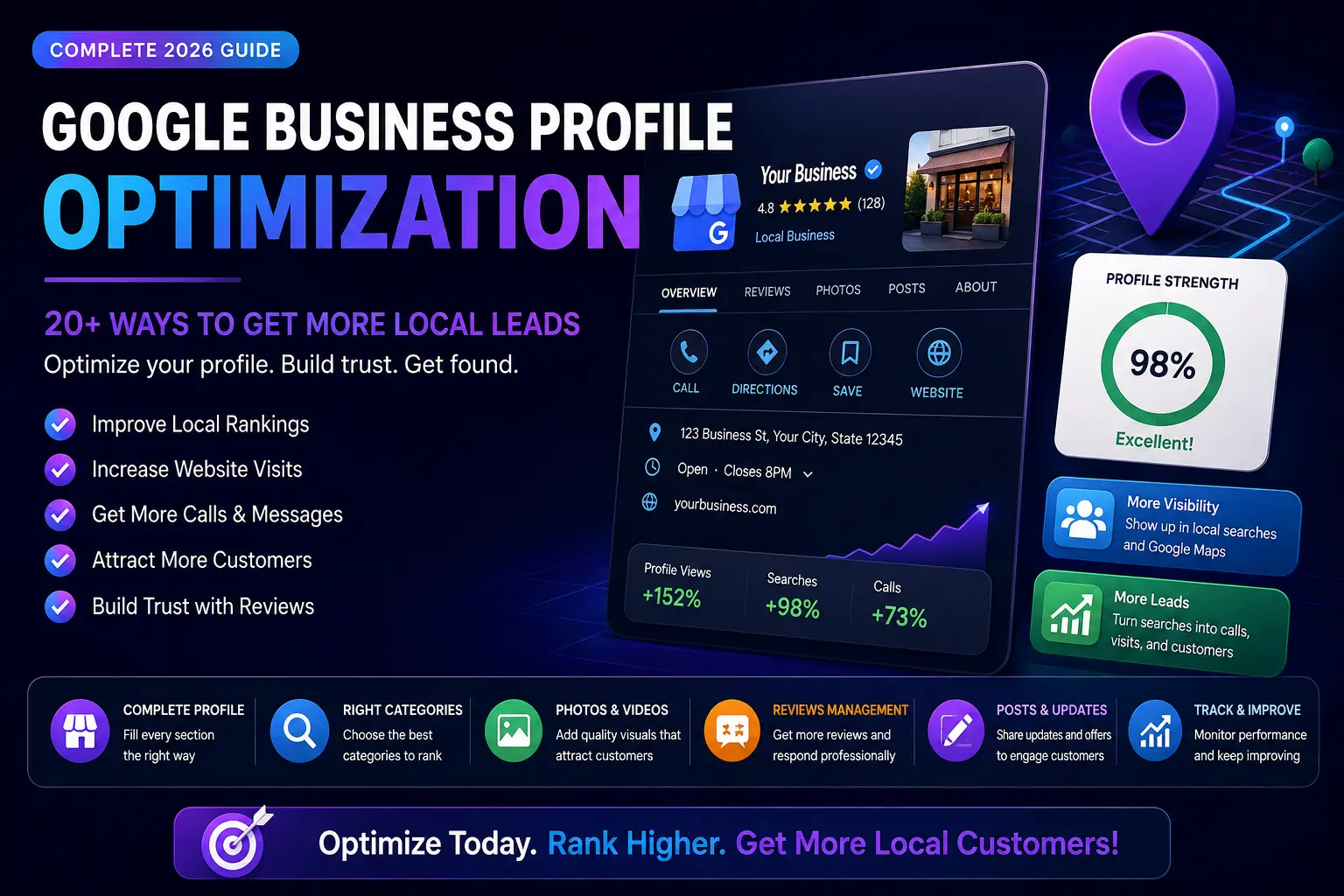
SEO
Google Business Profile Optimization: 20 Ways to Get More Local Leads
A half-finished Google Business Profile is one of the easiest local visibility gaps to fix — and one of the most commonly ignored.
Read Article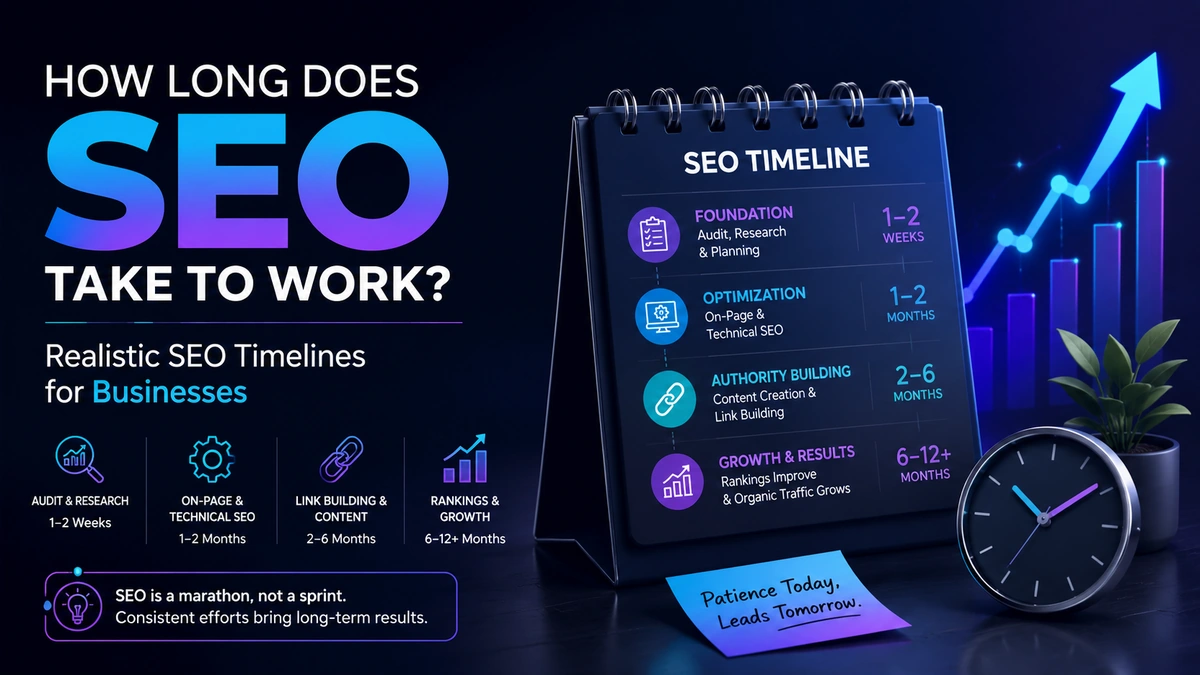
SEO
How Long Does SEO Take to Work? Realistic SEO Timelines for Businesses
Google's own guidance puts SEO results at four months to a year. Here's what actually happens in that window, month by month, and how to know if it's working.
Read Article