
SEO
Local SEO for Small Businesses: How to Get More Customers From Google Maps
Most local businesses lose customers to competitors not because they're worse — but because they're less visible in the exact moment someone nearby is searching.
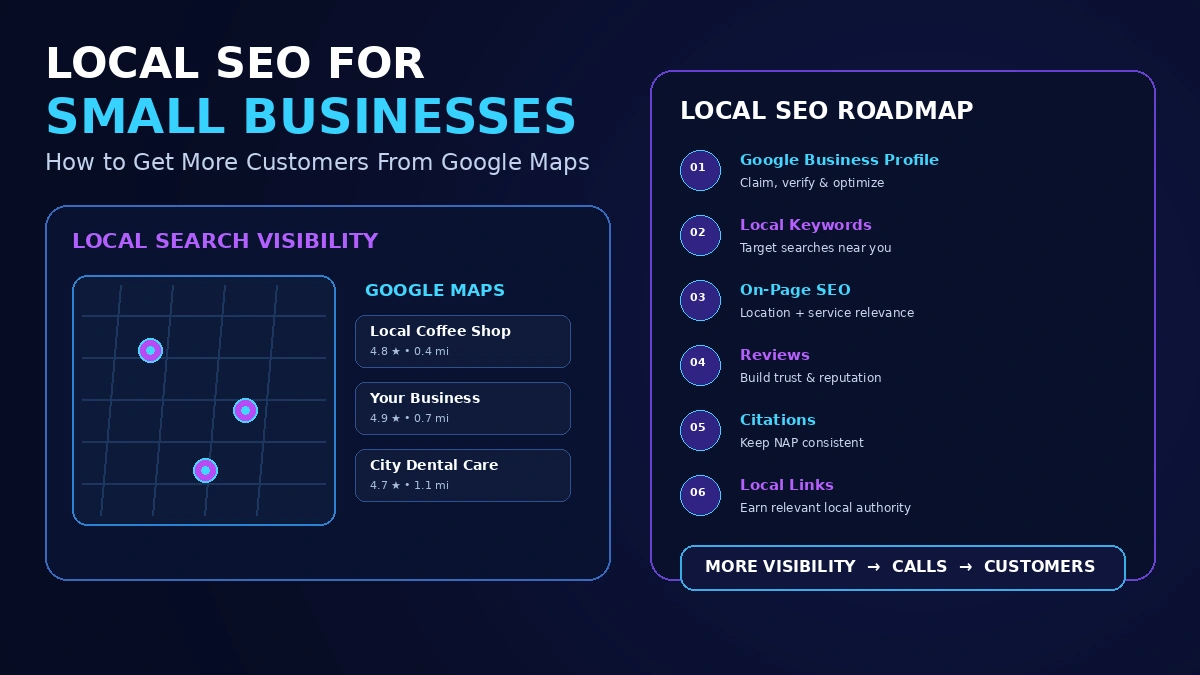
The short answer
Local SEO determines whether your business shows up when someone nearby searches for what you offer — in Google’s local pack, Google Maps results, and local-intent organic results. Per Google’s own Business Profile guidance, local rankings come down to three factors: relevance, distance, and prominence. Of those three, prominence and relevance are the ones a business can most directly influence — through a complete, accurate profile and genuine online reputation — while distance is largely outside your control.
The three local ranking factors, explained
- Relevance — how well your Business Profile matches what someone searched. A complete, accurately categorized profile with detailed service information gives Google more to match against.
- Distance — how close your business is to the searcher, or to the location they specified. You can’t change this directly, but accurately representing your true service area prevents Google from mismatching you against searches you can’t actually serve well.
- Prominence — how well-known your business is, based partly on information across the web, and explicitly including review count and quality. This is the factor most within a small business’s control to actively build over time.
What actually moves the needle
- Complete your Google Business Profile fully. Every category, attribute, service, and description field you leave blank is relevance signal you’re not giving Google. A deeper walkthrough of this lives in our guide to Google Business Profile optimization.
- Keep your business information consistent everywhere. Your business name, address, and phone number should match exactly across your website, Business Profile, and any directories you’re listed in — inconsistency actively undermines trust signals.
- Generate reviews consistently, not in bursts. A steady flow of genuine reviews reflects real prominence better than a cluster of reviews all collected at once, and responding to every review (positive or negative) is itself a signal of an active, legitimate business.
- Add real photos regularly. An actively maintained profile with current photos signals legitimacy that a static, years-old profile doesn’t.
- Build local relevance on your actual website too, not just your Business Profile — genuinely relevant, accurate content about your service area supports the same relevance signal from a second direction.
Local SEO vs. broader small business SEO
Local SEO is a component of the broader SEO strategy every small business needs, but it deserves specific attention because it draws on a distinct set of signals (Business Profile completeness, proximity, reviews) that don’t apply the same way to non-local search rankings.
Common local SEO mistakes
- Leaving the Google Business Profile incomplete, missing an easy, high-leverage relevance signal.
- Inconsistent NAP (name, address, phone) information across the web, which quietly undermines trust.
- Ignoring reviews, or worse, only responding to negative ones — an incomplete pattern that looks worse than no responses at all.
- Misrepresenting service areas with locations the business doesn’t genuinely serve, which can create a poor match between what Google shows and what a searcher actually finds.
- Treating local SEO as a one-time setup rather than an ongoing practice that benefits from consistent attention, similar to the technical and content checks in a broader SEO audit.
The bottom line
Local SEO comes down to giving Google clear, accurate, consistent information about what your business does and where it operates, then building genuine prominence through reviews and online recognition over time. It’s one of the more directly actionable areas of SEO for a small business — there’s no ambiguity about what Google says matters, and most of the highest-leverage actions (completing your profile, collecting reviews, staying consistent) don’t require a large budget to execute.
Frequently asked questions
What's the difference between local SEO and regular SEO?
Local SEO specifically targets visibility for people searching with local intent — either explicitly ("near me", a city name) or implicitly, where Google infers local intent from the search itself. It relies heavily on signals like proximity and Google Business Profile completeness that don't factor into non-local search rankings in the same way.
How important are reviews for local SEO?
Significant. Per Google's own guidance, prominence — a factor explicitly tied to review volume and quality, along with general online recognition — is one of the three core local ranking factors, making reviews one of the more directly influenceable signals available to a local business.
Does my business need a physical location to benefit from local SEO?
No — service-area businesses without a public-facing storefront can still have a Google Business Profile and benefit from local SEO, as long as they accurately represent their service area rather than a physical address they don't actually operate from.
How long does it take to see local SEO results?
Google Business Profile improvements can influence visibility relatively quickly compared to broader organic SEO, though building genuine prominence through reviews and citations still takes sustained effort over time rather than a one-time setup.
Can I improve local SEO without spending money on ads?
Yes — Google Business Profile optimization, consistent business information across the web, and genuine review generation are all free, and for most local businesses, they matter more for local visibility than paid advertising does.
More insights
SEO
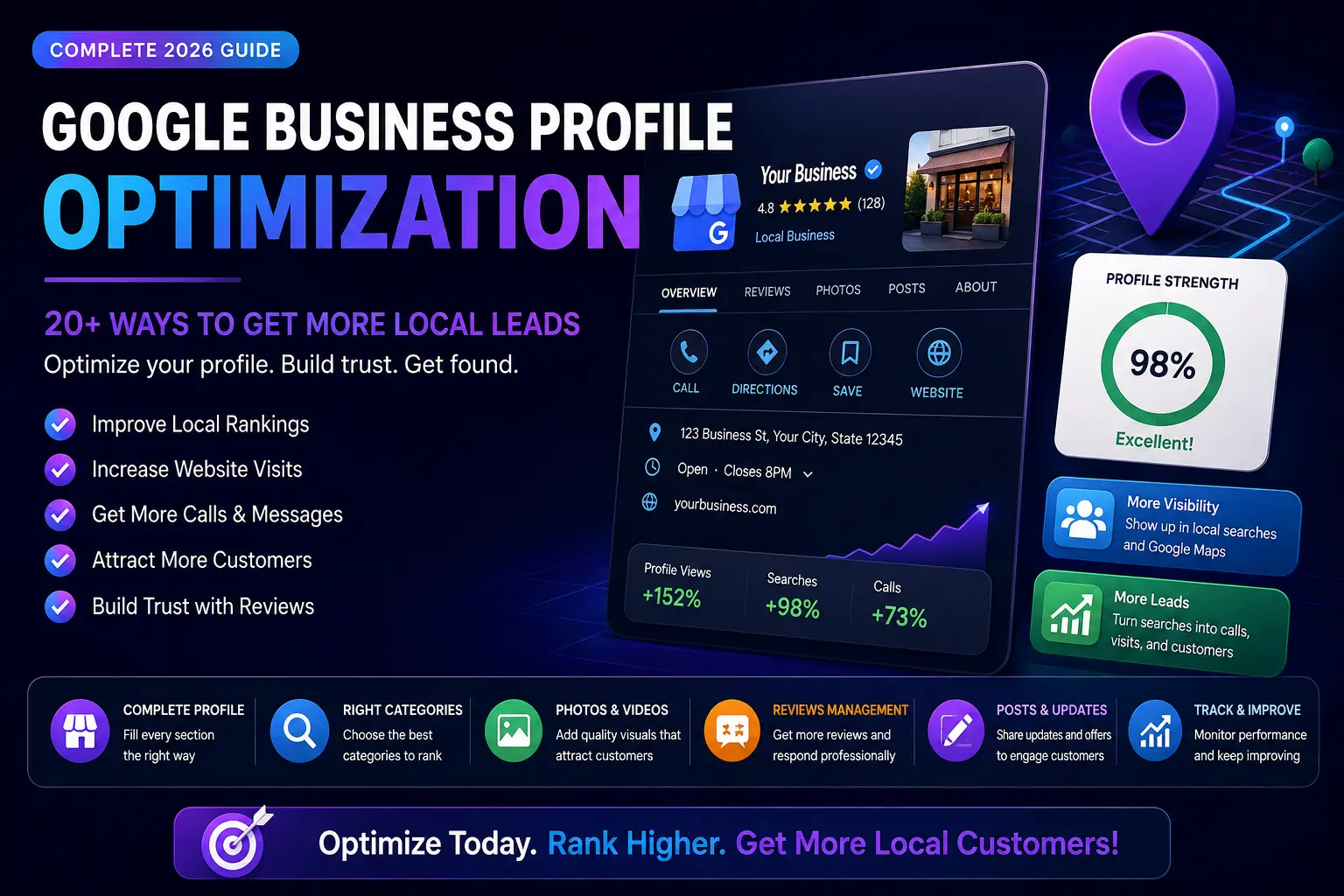
Google Business Profile Optimization: 20 Ways to Get More Local Leads
A half-finished Google Business Profile is one of the easiest local visibility gaps to fix — and one of the most commonly ignored.
Read Article
SEO
SEO for Small Businesses: A Practical Strategy to Get More Customers From Google
Small business SEO doesn't need to be complicated, but it does need to be sequenced correctly. Here's what to do first, second, and third — and what to skip.
Read Article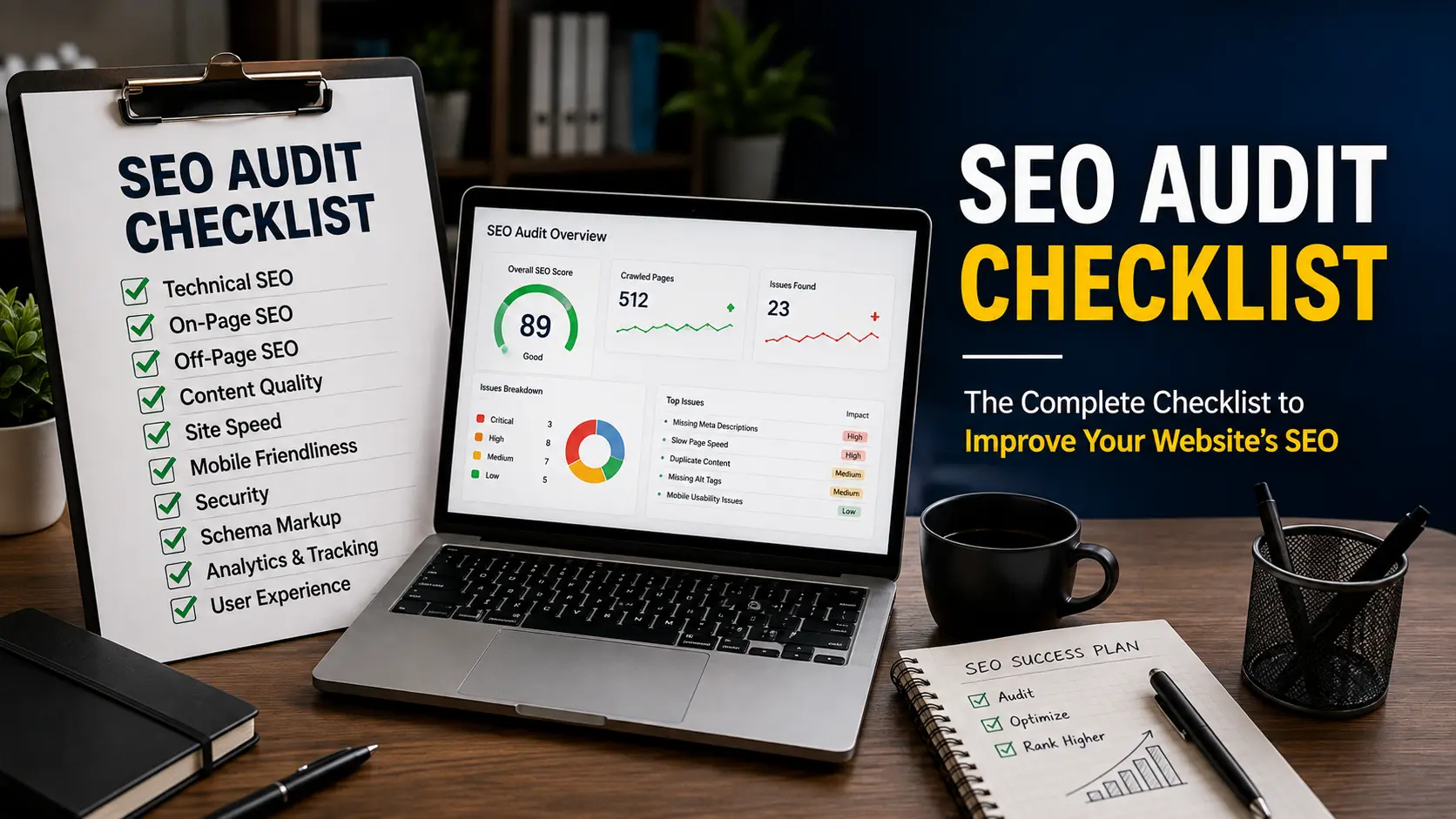
SEO
SEO Audit Checklist for Businesses: 25 Things to Check Before Hiring an Agency
Most businesses hire an SEO agency without knowing what's actually broken. A basic audit before that conversation changes the entire negotiation — here's exactly what to check.
Read Article