
SEO
What Is a Good SEO Strategy for a New Website in 2026?
A brand-new website competing on the same terms as established competitors is playing a losing game. Here's a strategy built for where a new site actually starts.
The short answer
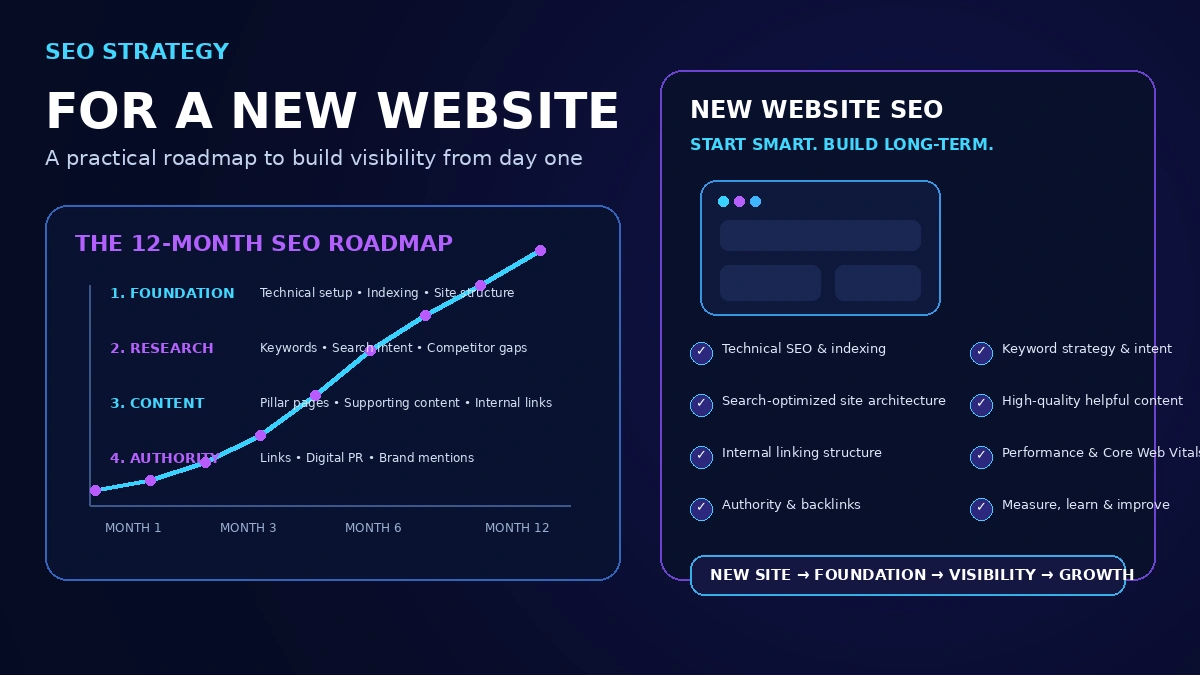
A new website has no history, no accumulated authority, and usually no existing traffic — which means an SEO strategy copied from an established competitor’s playbook will underperform. The right approach for a new site prioritizes technical foundations first, then specific, lower-competition keywords the site can realistically win, then gradually expands into more competitive territory as authority builds. Trying to compete immediately for the same broad terms an established competitor already ranks for is one of the most common reasons new-site SEO stalls.
Step 1: Get the technical foundation right before anything else
This is far easier to do correctly from the start than to fix retroactively:
- Clean, logical site structure and URL patterns
- Proper indexability (no accidental blocks in robots.txt, correct canonical tags)
- Mobile-friendly, fast-loading pages from day one
- Working XML sitemap submitted through Search Console
Skipping this step and focusing purely on content means building on a foundation that may quietly be limiting everything published on top of it.
Step 2: Target long-tail, lower-competition keywords first
A new site has essentially no authority to compete for broad, high-volume, high-competition terms against established sites. Proper keyword research for a new site should specifically prioritize more specific, lower-competition long-tail keywords — these have lower search volume individually, but they’re realistically winnable much sooner, and they compound as the site builds authority.
Step 3: Build a small number of genuinely strong pages, not many thin ones
Publishing dozens of shallow pages to hit a content quota rarely helps a new site — thin content doesn’t build authority and can actually dilute a small site’s overall quality signal. A handful of pages that each thoroughly answer a specific, real question tend to outperform a much larger volume of shallow content.
Step 4: Structure content around clusters from the start
Rather than publishing disconnected individual articles, group related content into topic clusters from the beginning — this is significantly easier to plan correctly on a new site than to retrofit later, and it’s covered in detail in our guide to building an SEO topic cluster strategy.
Step 5: Set realistic expectations for timeline
New sites almost always take longer to show results than established sites making incremental improvements, because there’s no accumulated history or authority to build on. Understanding how long SEO actually takes to show results — and that a new site typically sits at the slower end of that range — helps avoid abandoning a strategy prematurely because it “isn’t working” within a few weeks.
A realistic phased approach
| Phase | Focus |
|---|---|
| Pre-launch / early | Technical foundation, initial keyword research, core pages |
| Months 1–3 | Long-tail content, topic cluster structure, early indexing |
| Months 3–6 | Expand into moderately competitive terms as authority builds |
| 6+ months | Begin competing more directly on higher-competition terms |
This isn’t a fixed timeline — actual pace depends on competition, content quality, and consistency — but the sequence itself tends to hold across most new-site scenarios.
Common mistakes with new website SEO
- Targeting the same broad keywords as established competitors immediately, rather than building toward them.
- Publishing a large volume of thin content to hit an arbitrary page count.
- Neglecting technical foundations in favor of jumping straight to content.
- Expecting fast results and abandoning the strategy before it’s had realistic time to work.
- Chasing backlinks before there’s genuinely link-worthy content to point them at.
The bottom line
A good SEO strategy for a new website isn’t a smaller version of an established site’s strategy — it’s a different sequence built around where a new site actually starts: no authority, no history, and a longer runway to compete for the same terms. Get the technical foundation right, target realistically winnable keywords first, build depth over breadth, and structure content for long-term growth rather than short-term page count.
Frequently asked questions
How long before a new website starts ranking on Google?
It varies, but new sites should expect a slower start than established competitors since search engines weigh site history and accumulated authority. Meaningful movement often takes several months of consistent work rather than weeks, which is covered in more depth in our guide to how long SEO actually takes.
Should a new website target competitive, high-volume keywords right away?
Generally no. A brand-new site with no authority is unlikely to outrank established competitors for competitive terms early on. Targeting more specific, lower-competition long-tail keywords first tends to produce faster, more achievable wins while the site builds authority.
Does a new website need backlinks immediately?
Backlinks matter, but they're more effective once there's genuinely link-worthy content on the site. Building technical health and core content first, then pursuing backlinks to that content, tends to work better than chasing links before there's anything substantial to link to.
How many pages should a new website launch with?
Fewer, well-developed pages that each genuinely address a specific topic tend to outperform a large number of thin pages published just to increase page count. Depth and clarity matter more early on than sheer volume.
Is it worth doing SEO before a new website officially launches?
Yes — technical foundations (site structure, indexability, mobile usability) and initial keyword research are far easier to get right before launch than to retrofit afterward, and getting them right from day one avoids accumulating issues that have to be fixed later.
More insights
SEO
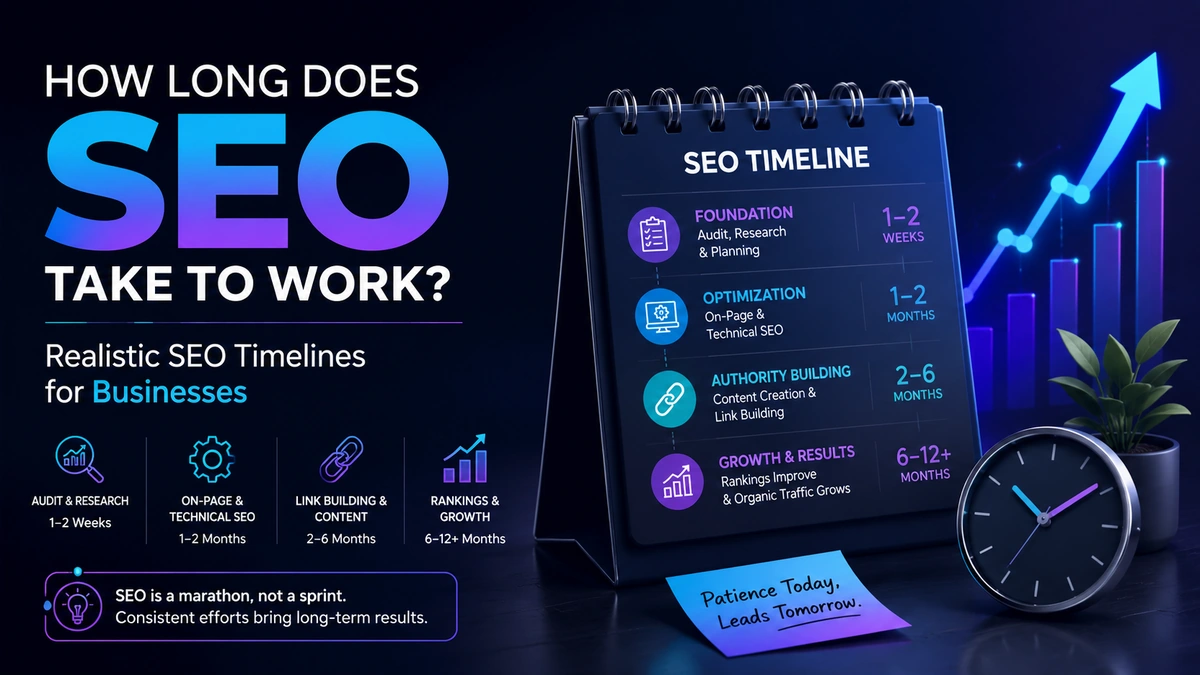
How Long Does SEO Take to Work? Realistic SEO Timelines for Businesses
Google's own guidance puts SEO results at four months to a year. Here's what actually happens in that window, month by month, and how to know if it's working.
Read Article
SEO
How to Do Keyword Research for a Business Website: Complete 2026 Guide
The keyword with the most search volume is rarely the one worth targeting first. Here's a practical, non-inflated approach to keyword research for a real business.
Read Article
Content Marketing
SEO Content Strategy: How to Build a Topic Cluster That Ranks
A pile of disconnected blog posts and a genuine topic cluster can cover the exact same subjects — and perform completely differently in search.
Read Article