
SEO
How to Do Keyword Research for a Business Website: Complete 2026 Guide
The keyword with the most search volume is rarely the one worth targeting first. Here's a practical, non-inflated approach to keyword research for a real business.

The short answer
Good keyword research isn’t about finding the highest-volume terms available — it’s about finding the specific terms your actual customers search, understanding what they want when they search them, and prioritizing the ones your site can realistically compete for right now. A smaller list of well-matched, winnable keywords consistently outperforms a longer list built purely around search volume.
Step 1: Start from real customer language, not guesses
Before opening any tool, list the actual questions and phrases customers use when describing their problem — from sales calls, support tickets, or how you’d naturally explain your service to a friend. This grounds your research in real language rather than industry jargon that customers may not actually search.
Step 2: Use keyword tools to expand and validate, not to originate
Google’s own Keyword Planner, free with a Google Ads account, is a reasonable starting point for expanding your seed list and getting directional search volume. Its data is built primarily for paid search advertisers, so treat volume figures — often shown as ranges rather than exact numbers — as directional, not precise. Third-party SEO tools can add estimated keyword difficulty and additional keyword suggestions, but they’re supplements to real customer language, not a replacement for it.
Step 3: Understand search intent before you target anything
Every keyword implies an intent — informational (learning something), navigational (looking for a specific site), or transactional (ready to act). Targeting a keyword without matching your page to its actual intent is one of the most common keyword research mistakes: a “what is X” search wants an explanation, not a hard sales pitch, and a “buy X” search wants a clear path to purchase, not a long educational article.
Step 4: Prioritize by realistic winnability, not volume alone
| Keyword type | Volume | Competition | Best for |
|---|---|---|---|
| Broad, generic | High | High | Established sites with real authority |
| Specific, long-tail | Lower | Lower | New or growing sites, faster realistic wins |
| Branded/competitor | Varies | Varies | Sites with existing recognition or comparison content |
A new or smaller site chasing only high-volume, high-competition terms is fighting a battle it’s unlikely to win yet. This is closely tied to building the right SEO strategy for a new website — start where you can realistically compete, then expand.
Step 5: Group keywords into topics, not isolated targets
Rather than treating each keyword as its own separate page target, group related keywords around core topics your business genuinely covers. This naturally leads into building a topic cluster strategy, where one comprehensive page or cluster of pages captures a whole family of related searches instead of chasing every keyword individually.
Common keyword research mistakes
- Chasing volume over intent. A high-volume keyword with mismatched intent for your page converts poorly even if it ranks.
- Ignoring your site’s realistic authority. Targeting the same competitive terms as an established competitor without the authority to compete for them.
- Treating keyword research as a one-time task. Search behavior shifts over time — keyword research should be revisited periodically, not done once and never revisited.
- Optimizing one page for too many unrelated keywords, diluting relevance instead of strengthening it.
- Skipping intent analysis entirely and jumping straight from a keyword list to content without checking what searchers actually want.
The bottom line
Keyword research done well is about matching real customer language to realistic, intent-aligned opportunities — not maximizing a spreadsheet of high-volume terms. Start from how customers actually talk about their problem, use tools to expand and validate rather than originate, respect search intent, and prioritize keywords your site can genuinely compete for today. That approach consistently produces better results than chasing the biggest numbers on a keyword report.
Frequently asked questions
What's the difference between search volume and keyword difficulty?
Search volume measures how often a term is searched; keyword difficulty (a metric from third-party SEO tools, not an official Google metric) estimates how hard it would be to rank for that term given existing competition. A high-volume, high-difficulty keyword can be a worse target than a lower-volume, low-difficulty one if your site doesn't yet have the authority to compete for the former.
Is Google Keyword Planner accurate for organic SEO research?
It's a genuinely useful free starting point, since it comes directly from Google, but it's built primarily for paid search advertisers. Per Google's own documentation, search volumes are often shown as ranges rather than exact numbers unless you have active ad spend, so treat the numbers as directional rather than precise for organic planning.
How many keywords should I target per page?
One primary keyword and a small handful of closely related secondary and semantic terms per page tends to work better than cramming many unrelated keywords onto a single page, which usually dilutes relevance for all of them rather than strengthening any one.
What is search intent and why does it matter?
Search intent is what someone actually wants when they type a query — information, a specific website, or to make a purchase. Targeting a keyword whose intent doesn't match what your page offers (for example, targeting a research-stage term with a hard sales page) usually results in poor rankings and poor conversion, even if the keyword itself has decent volume.
Should I target keywords my competitors already rank for?
It can be a useful research signal, but a keyword being valuable to a competitor doesn't automatically make it winnable for you, especially if their site has significantly more authority. Use competitor keywords as ideas to evaluate, not as a target list to copy directly.
More insights
SEO
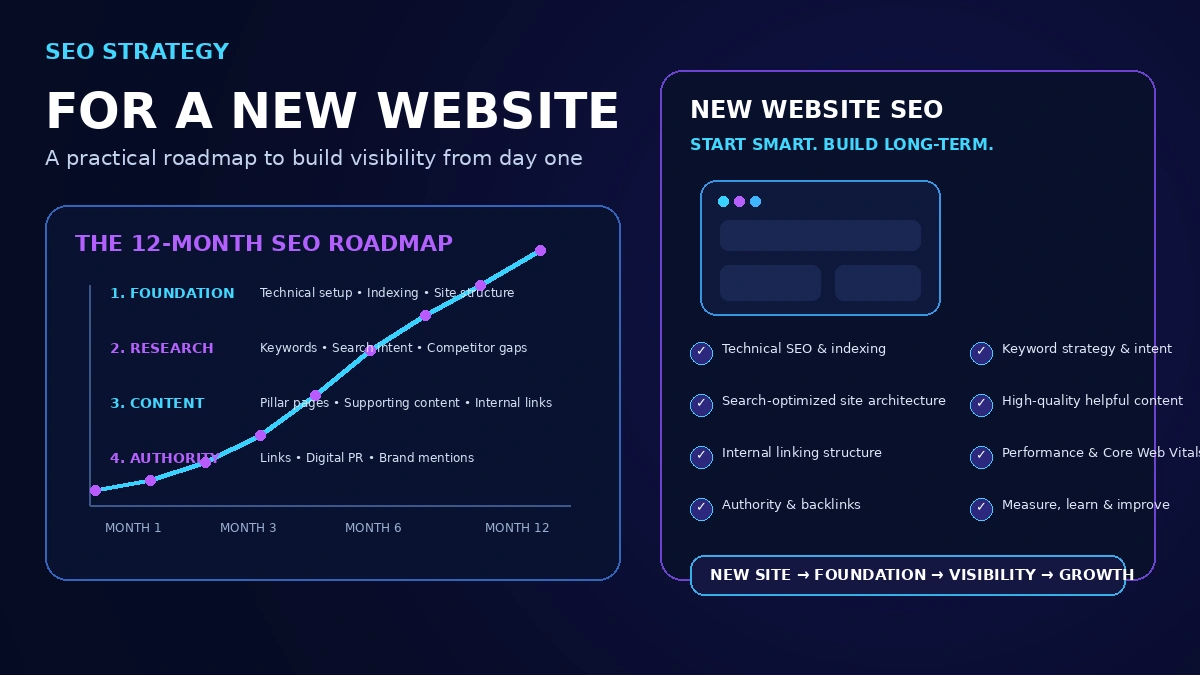
What Is a Good SEO Strategy for a New Website in 2026?
A brand-new website competing on the same terms as established competitors is playing a losing game. Here's a strategy built for where a new site actually starts.
Read Article
Content Marketing
SEO Content Strategy: How to Build a Topic Cluster That Ranks
A pile of disconnected blog posts and a genuine topic cluster can cover the exact same subjects — and perform completely differently in search.
Read Article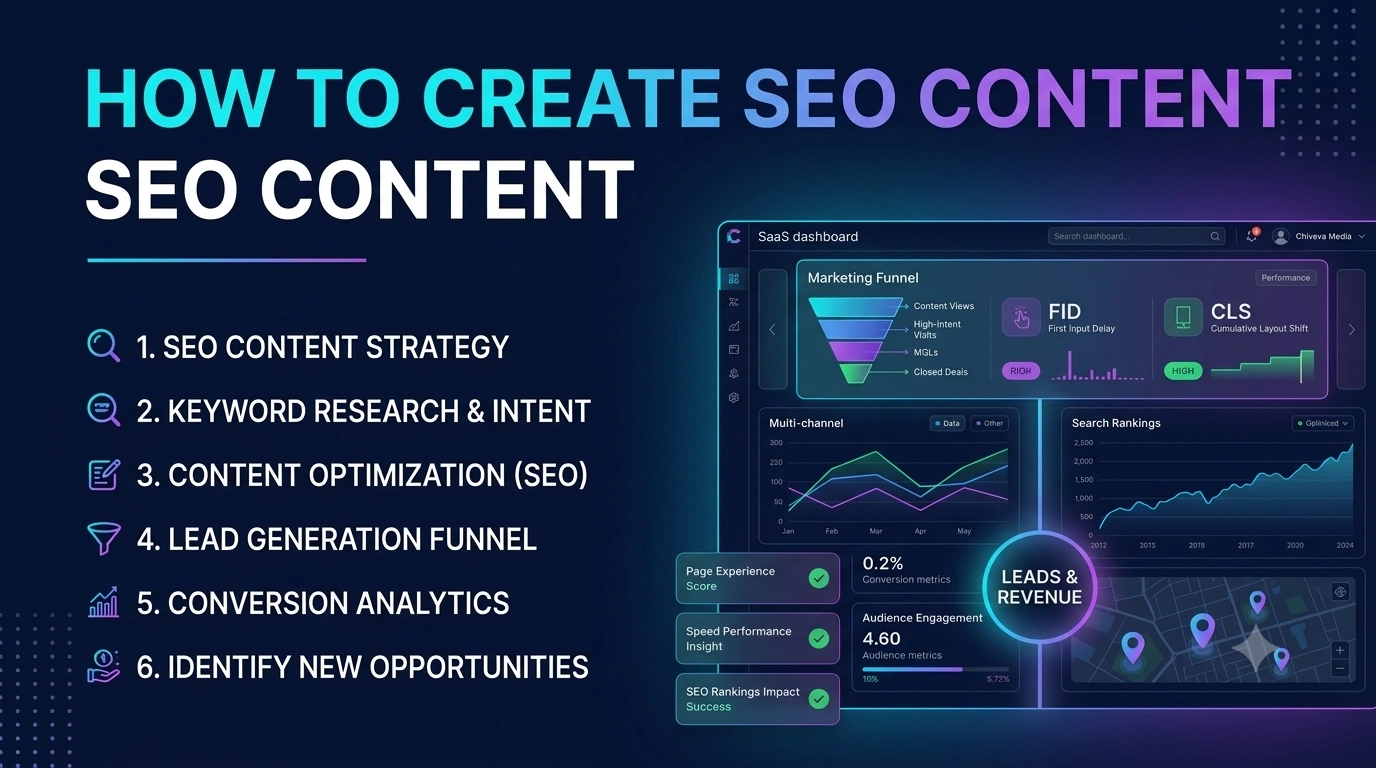
Content Marketing
How to Create SEO Content That Actually Generates Leads
A lot of SEO content ranks well and generates almost no business value. Here's the difference between content built to rank and content built to rank and convert.
Read Article