
Digital Marketing Strategy
How to Build a Digital Marketing Strategy That Actually Generates Leads
A digital marketing strategy isn't a list of channels — it's a sequence of decisions. Here's the order that actually works, and where most strategies go wrong.
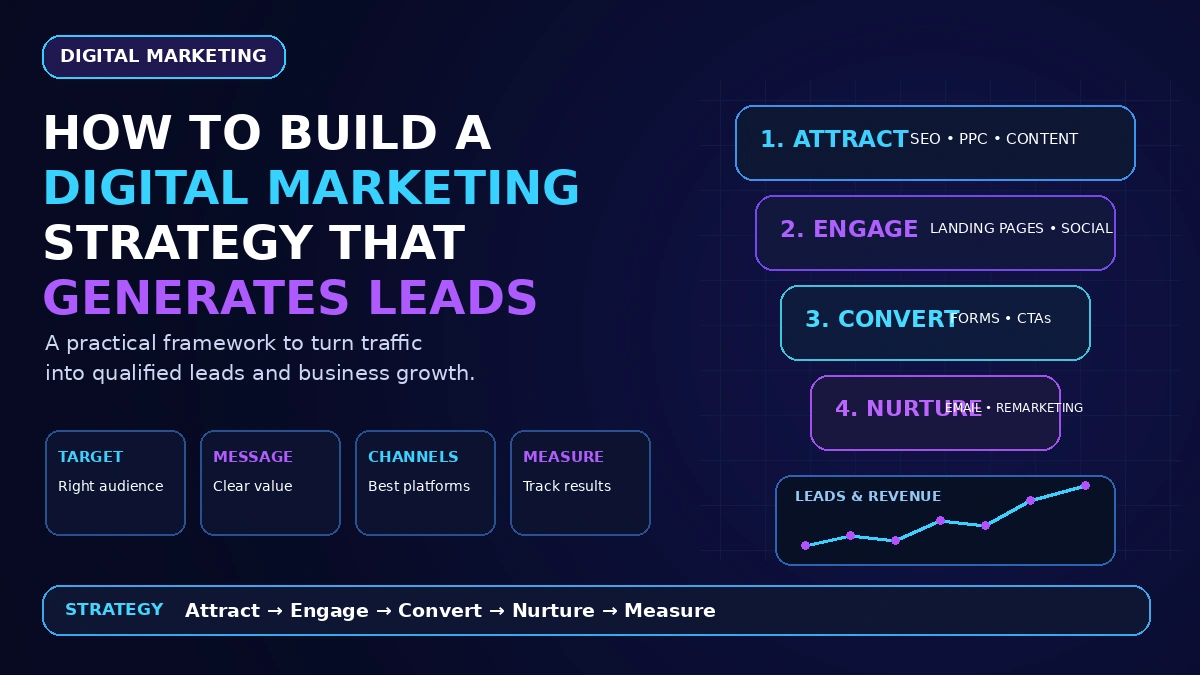
The short answer
A digital marketing strategy that actually generates leads starts with three decisions made in order — who you’re targeting, what problem you solve for them, and where those specific people already spend attention and search for solutions — before any channel gets chosen. Most strategies that underperform skipped straight to “let’s do social media” or “we need SEO” without answering those first two questions, which makes even well-executed campaigns land on the wrong audience or the wrong message.
Step 1: Define who you’re actually targeting
Vague targeting (“small businesses,” “homeowners”) produces vague messaging that doesn’t compel anyone specifically. Effective targeting gets specific about the actual problem a defined group of people has, what they’ve likely already tried, and what would make your solution the obvious next step for them — not a demographic profile alone.
Step 2: Map where that audience already looks for solutions
This is the step most strategies skip. If your audience actively searches for solutions to their problem, channels built around search intent — SEO and paid search — tend to perform best. If your audience isn’t actively searching yet because they don’t know a solution like yours exists, channels built around discovery and interest — like Meta Ads — tend to work better for creating that initial awareness.
Step 3: Choose channels based on that mapping, not popularity
| If your audience… | Consider prioritizing |
|---|---|
| Actively searches for your type of solution | SEO, Google Ads |
| Doesn’t yet know solutions like yours exist | Social/discovery advertising, content marketing |
| Needs a longer research and trust-building process | Content marketing, email, SEO |
| Makes fast, lower-consideration purchase decisions | Paid search, paid social |
Trying to run every channel at once with a limited budget is one of the most common reasons strategies underperform — thin coverage across five channels usually loses to focused coverage across one or two.
Step 4: Build a real conversion path, not just traffic
Traffic without a clear path to conversion doesn’t generate leads — it generates visits. Every channel in your strategy needs somewhere specific to send people: a landing page, offer, or next step matched to what brought them there in the first place. Turning traffic into leads is a distinct skill from generating the traffic itself, and strategies that only invest in the top of the funnel routinely underperform ones that also invest in the conversion path.
Step 5: Set up measurement before you need it
Decide upfront what you’re actually measuring — leads, qualified leads, cost per acquisition, revenue — not just clicks or impressions, which don’t tell you whether the strategy is working. Measuring digital marketing ROI properly from the start avoids the common trap of six months of activity with no clear read on what actually worked.
Common mistakes in digital marketing strategy
- Choosing channels first, audience second. This produces campaigns technically well-executed on a channel that was never the right fit.
- Spreading budget too thin across too many channels to see meaningful results from any single one.
- No clear conversion path — driving traffic to a generic homepage instead of a page built for the specific offer and audience.
- No measurement plan, making it impossible to tell later which parts of the strategy actually worked.
- Treating the strategy as static. A strategy built for one moment in the business needs revisiting as the business, competition, and channels themselves change.
The bottom line
A digital marketing strategy that generates real leads is built in a specific order: define who you’re targeting, understand where they actually look for solutions, choose channels that match that behavior, build a real conversion path, and measure what matters from day one. Businesses that follow that sequence tend to outperform ones that pick trendy channels first and try to reverse-engineer a strategy around them afterward.
Frequently asked questions
What's the difference between a digital marketing strategy and a digital marketing plan?
A strategy defines the direction — who you're targeting, what problem you solve for them, and which channels make sense given that. A plan is the tactical execution of that strategy — specific campaigns, content calendars, and budgets. Building a plan without a strategy behind it usually results in disconnected, inconsistent activity.
How many marketing channels should a small business use at once?
Fewer than most businesses attempt. It's generally more effective to do one or two channels well — with enough budget and consistency to actually see results — than to spread a limited budget thin across five channels and see meaningful results from none of them.
How long does a digital marketing strategy take to show results?
It depends heavily on the channel mix. Paid channels can show results within weeks, while organic channels like SEO typically take several months to build momentum. A well-built strategy usually blends both so early paid results support the business while organic channels compound.
Do I need a big budget to have an effective digital marketing strategy?
No — a smaller budget focused on one or two well-matched channels, aimed at a clearly defined audience, usually outperforms a larger budget spread thin across channels that don't fit the business well.
What's the most common reason digital marketing strategies fail?
Picking channels before defining the goal and audience. Businesses often start with 'we should be on social media' or 'we need SEO' without first answering who they're trying to reach and what those people actually do when they're looking for a solution.
More insights
Digital Marketing Strategy
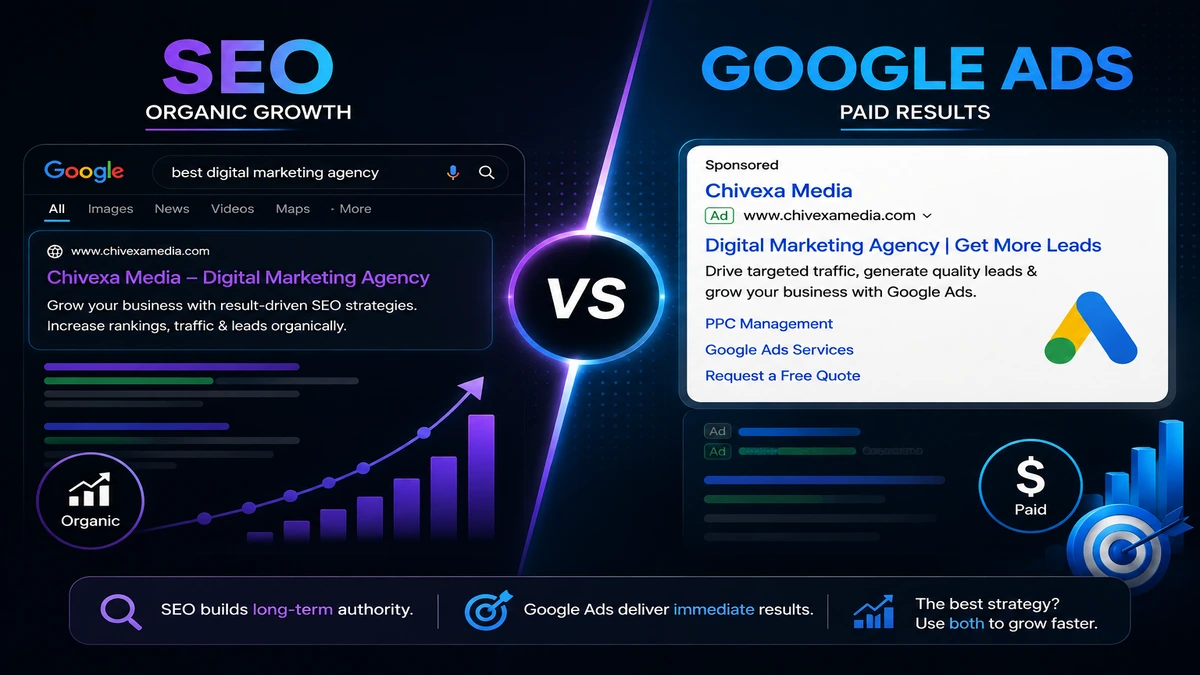
SEO vs Google Ads: Which Is Better for Business Growth in 2026?
SEO and Google Ads solve different problems. Here's how each one actually works, what it costs you in time versus budget, and a practical framework for deciding where to invest first.
Read Article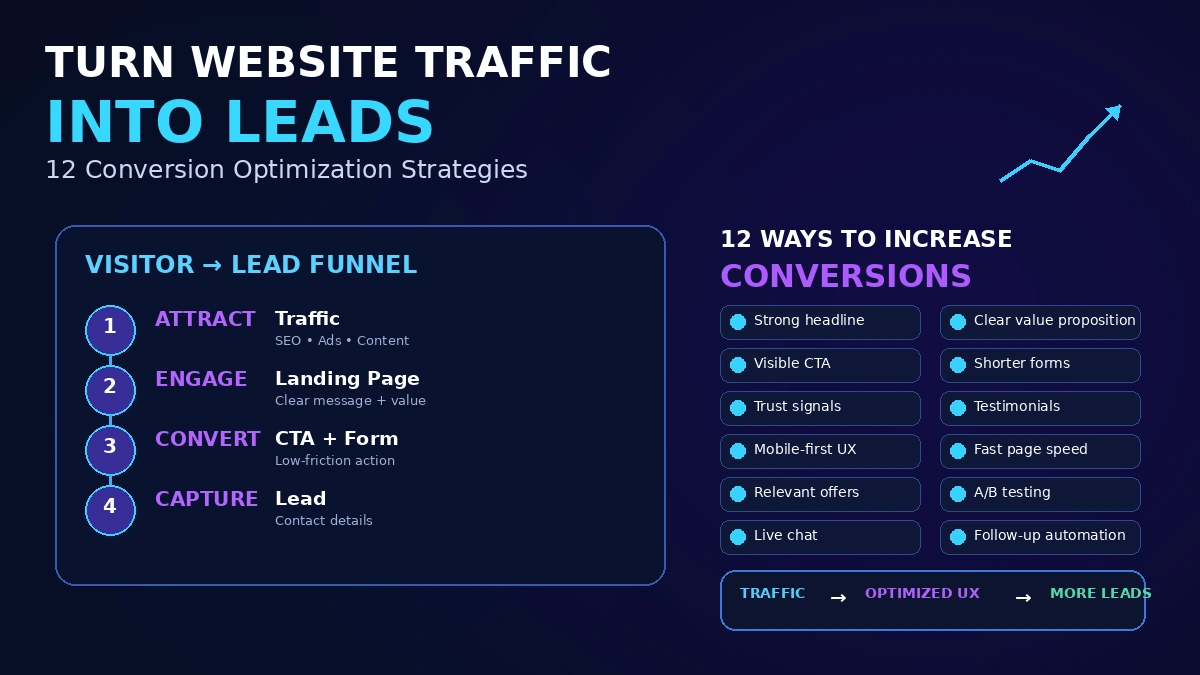
Conversion Optimization
How to Turn Website Traffic Into Leads: 12 Conversion Optimization Strategies
Most businesses have a traffic problem they're trying to solve with more traffic, when the real problem is that the traffic they already have isn't converting.
Read Article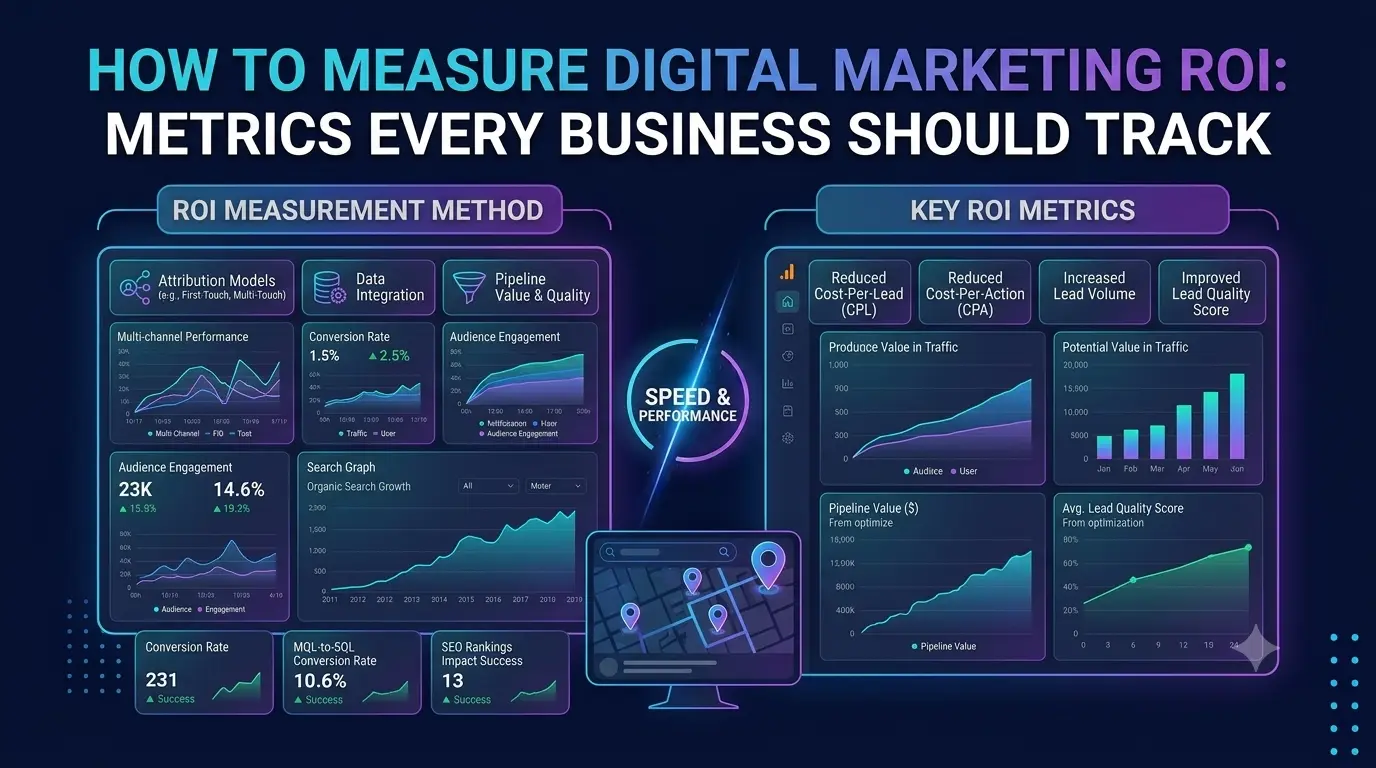
Digital Marketing Strategy
How to Measure Digital Marketing ROI: Metrics Every Business Should Track
Traffic, impressions, and likes are easy to report and rarely tell you whether marketing is actually working. Here's what to measure instead.
Read Article