
Digital Marketing Strategy
Digital Marketing for B2B Companies: SEO, Paid Ads and Content Strategy
By the time most B2B buyers talk to a salesperson, they've already done the majority of their research alone. That changes what SEO, ads, and content need to accomplish.
The short answer
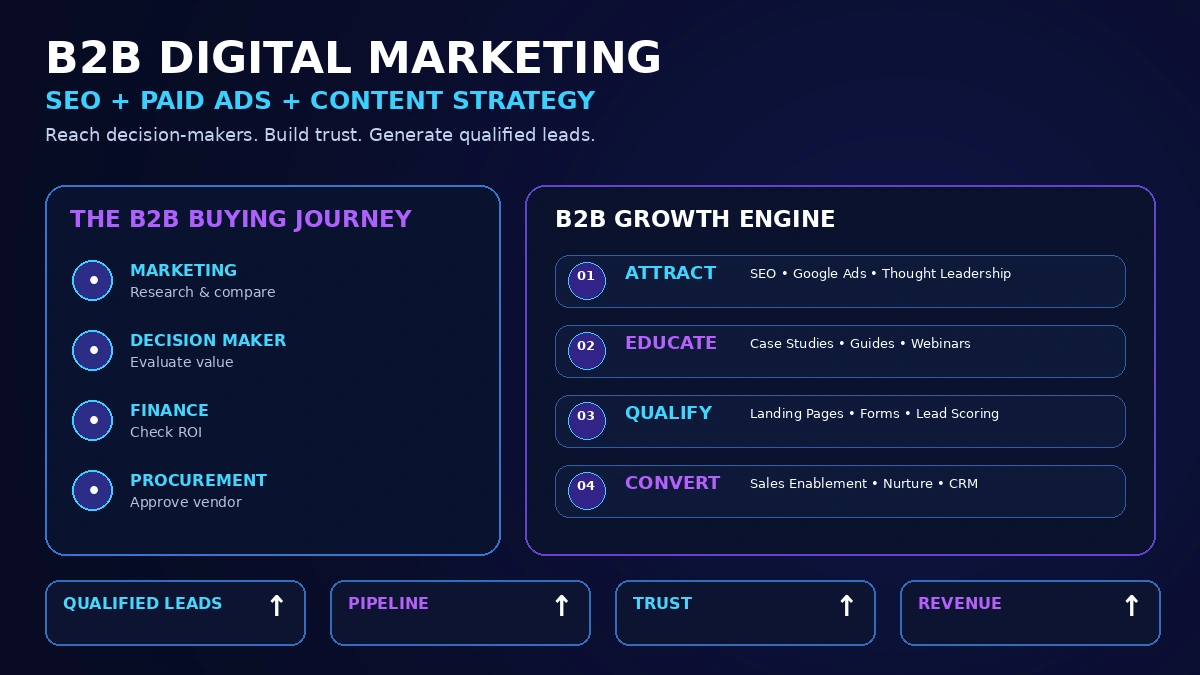
B2B digital marketing has to account for a buying process that happens mostly without you. Per Gartner’s research on the B2B buying journey, a large majority of the process happens through independent, self-directed research before a buyer ever engages a vendor directly — and a typical buying group now includes multiple stakeholders, each researching separately before converging on a decision. That reshapes what SEO, paid ads, and content need to do: less about closing a single decision-maker fast, and more about being genuinely useful to several different people at different points in a longer process.
Why B2B buying behavior changes the strategy
A 2026 Gartner survey found that even as buyers increasingly use AI tools to research vendors, most still turn to a human sales rep to validate what they’ve found — meaning content still has to be genuinely credible and specific enough to hold up to that scrutiny later, not just persuasive in isolation. With multiple stakeholders each doing independent research, no single piece of content or single channel is likely to reach everyone involved in the decision — which is why B2B strategies typically need more channel and content diversity than a single-decision-maker B2C sale.
SEO for B2B
- Target lower-volume, higher-intent keywords. B2B search volume is almost always smaller than consumer search volume, but the intent behind those searches tends to be much more qualified.
- Build content for every stakeholder role, not just one persona — a technical evaluator and a budget-holder are searching for different things and need different content to feel confident.
- Invest in genuinely in-depth content. Because buyers research independently and extensively before contacting sales, thin content loses to competitors offering real depth on the same topic.
- Structure content in clusters, connecting related topics so a buyer researching one aspect of a decision naturally finds your coverage of the related aspects too — the same logic behind SEO content that generates leads.
Paid ads for B2B
Paid search tends to perform well for B2B when buyers are actively searching with clear commercial intent (comparison or solution-category terms). Paid social works better as a supporting channel — building name recognition with specific job titles or company types ahead of the moment they start actively searching — rather than expecting a cold paid-social click to convert directly into a qualified lead.
Content strategy for longer B2B sales cycles
| Buyer stage | Content that fits |
|---|---|
| Early research (self-directed) | Educational guides, comparisons, original data |
| Stakeholder alignment | Case studies, ROI frameworks, technical detail |
| Vendor validation | Customer proof, direct comparisons, credentials |
| Post-sale expansion | Onboarding content, best-practice guides |
Because a large share of the decision happens before any direct contact, content built for the early and middle stages often has more overall influence on a B2B deal than content built purely to push for a final conversion.
Measurement looks different in B2B too
With multiple stakeholders and a long research phase, single-touch attribution (crediting one ad click or one page visit for a deal) rarely reflects reality. Marketing attribution that accounts for multiple touchpoints across a longer timeline gives a far more honest picture of what’s actually influencing B2B decisions.
Common mistakes in B2B digital marketing
- Treating it like a faster-moving B2C funnel, expecting quick conversions from channels built for immediate-intent purchases.
- Writing for one persona only, when most real B2B decisions involve several stakeholders with different priorities.
- Under-investing in content depth, losing to competitors willing to genuinely educate a research-heavy buyer.
- Relying on last-click attribution, which systematically undercredits the early research content that actually shaped the decision.
The bottom line
B2B digital marketing works best when it’s built around how B2B buyers actually behave: extensive independent research, multiple stakeholders, and a longer path to decision. SEO and content should support that research phase with real depth, paid ads should match actual buyer intent rather than force early urgency, and measurement needs to account for a longer, multi-touch journey rather than a single conversion event.
Frequently asked questions
Is SEO worth it for B2B companies with a small search volume?
Often yes, even with lower search volume than consumer markets, because B2B keywords tend to reflect much higher purchase intent and each conversion is typically worth significantly more. Lower volume doesn't mean lower value when the buyers searching are genuinely qualified.
How long does B2B content marketing take to generate leads?
Longer than most B2C content, generally, because B2B sales cycles themselves are longer and involve more stakeholders doing independent research over time. Content built for B2B needs to support that extended research process rather than push for an immediate conversion.
Should B2B companies use paid social media ads?
It can work well for awareness and reaching specific job titles or company types, particularly on platforms with strong professional targeting, but B2B paid social usually performs better as a support channel — building familiarity ahead of a search-driven or sales-initiated conversation — than as a direct, immediate lead-generation channel on its own.
What's the biggest difference between B2B and B2C digital marketing?
B2B marketing usually has to persuade multiple stakeholders with different priorities across a much longer decision process, while B2C marketing often targets a single decision-maker moving faster from interest to purchase. That difference shapes almost every channel decision that follows.
Do B2B companies need a blog?
In most cases, yes — since a large share of the B2B buying process happens through independent research before a buyer ever contacts a vendor, having genuinely useful content available for that research phase is one of the more reliable ways to be part of the conversation before sales even gets involved.
More insights
Digital Marketing Strategy
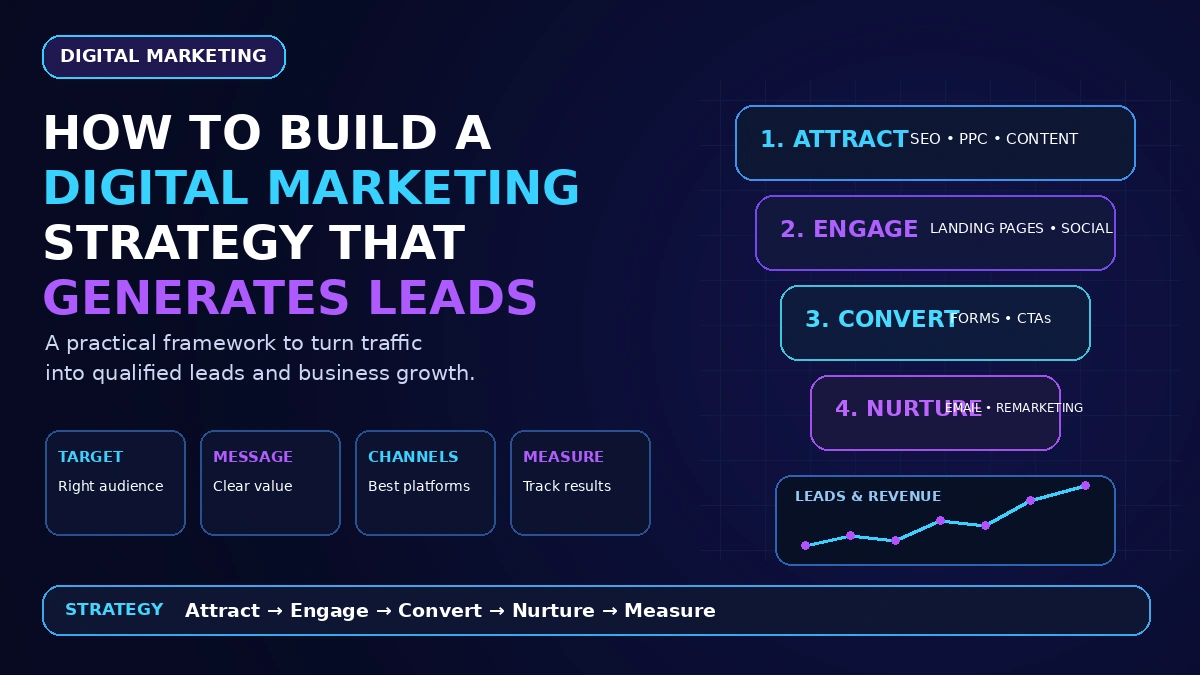
How to Build a Digital Marketing Strategy That Actually Generates Leads
A digital marketing strategy isn't a list of channels — it's a sequence of decisions. Here's the order that actually works, and where most strategies go wrong.
Read Article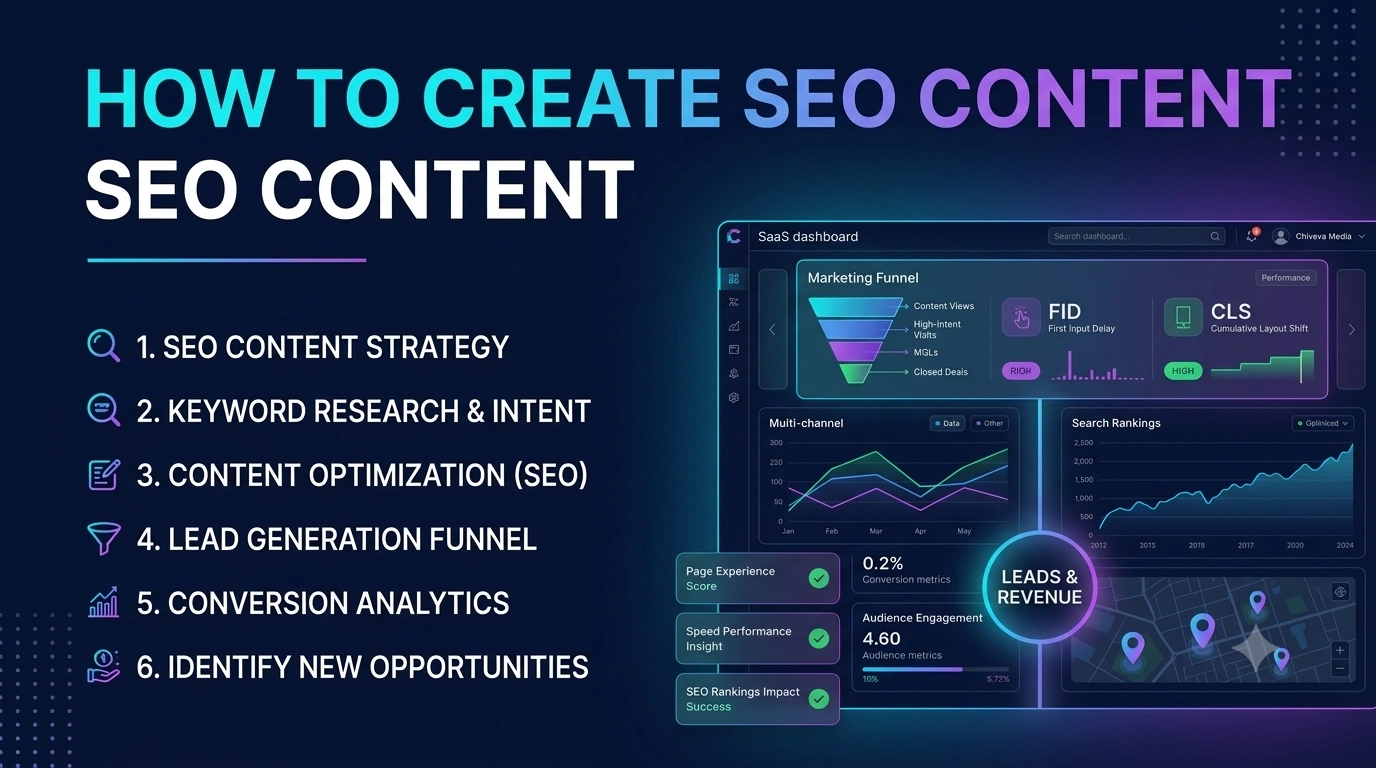
Content Marketing
How to Create SEO Content That Actually Generates Leads
A lot of SEO content ranks well and generates almost no business value. Here's the difference between content built to rank and content built to rank and convert.
Read Article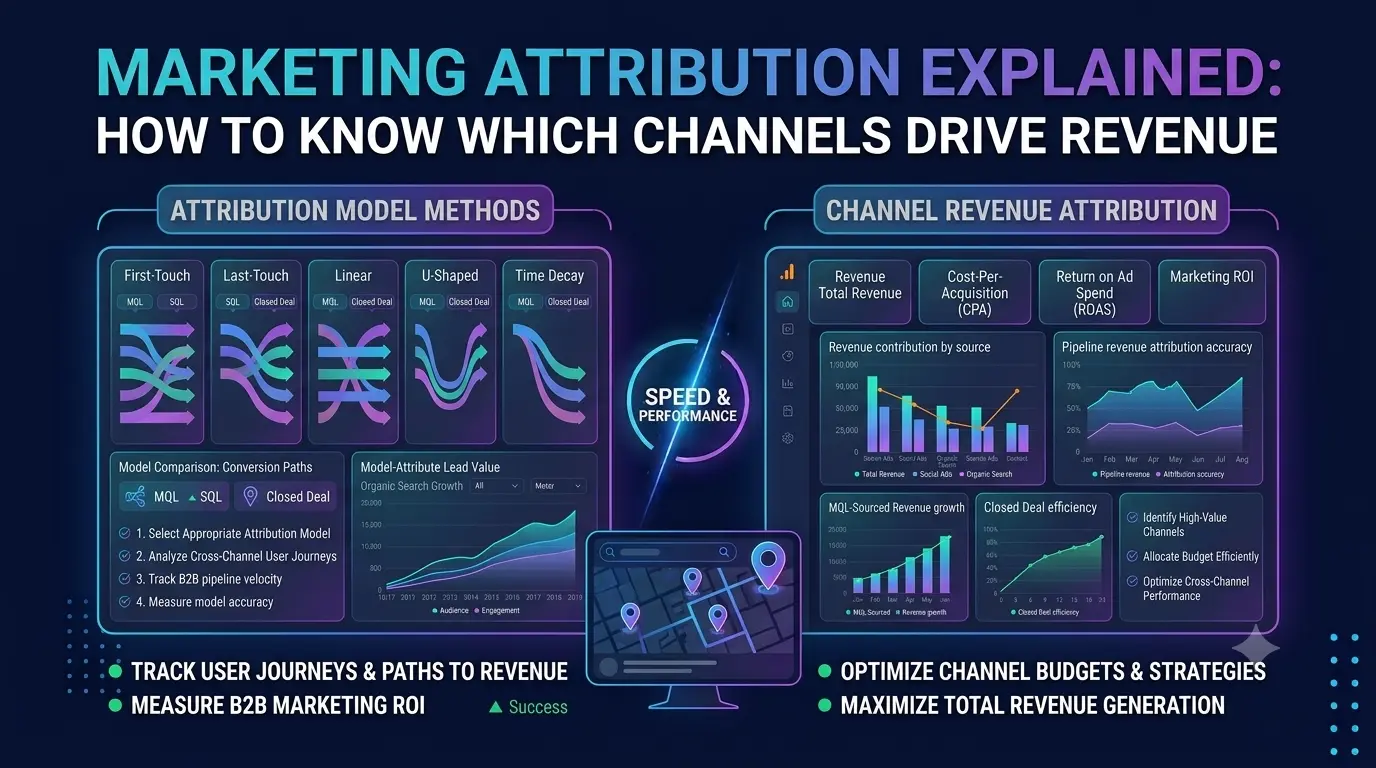
Digital Marketing Strategy
Marketing Attribution Explained: How to Know Which Channels Drive Revenue
The channel that gets the last click before a sale isn't necessarily the channel that actually drove the decision. Attribution is how you find out which one really did.
Read Article