
SEO
SEO Reporting for Business Owners: Which Metrics Actually Matter?
A 40-tab SEO report full of metrics is easy to produce and hard to act on. Here's the short list that actually tells you whether SEO is working.
The short answer
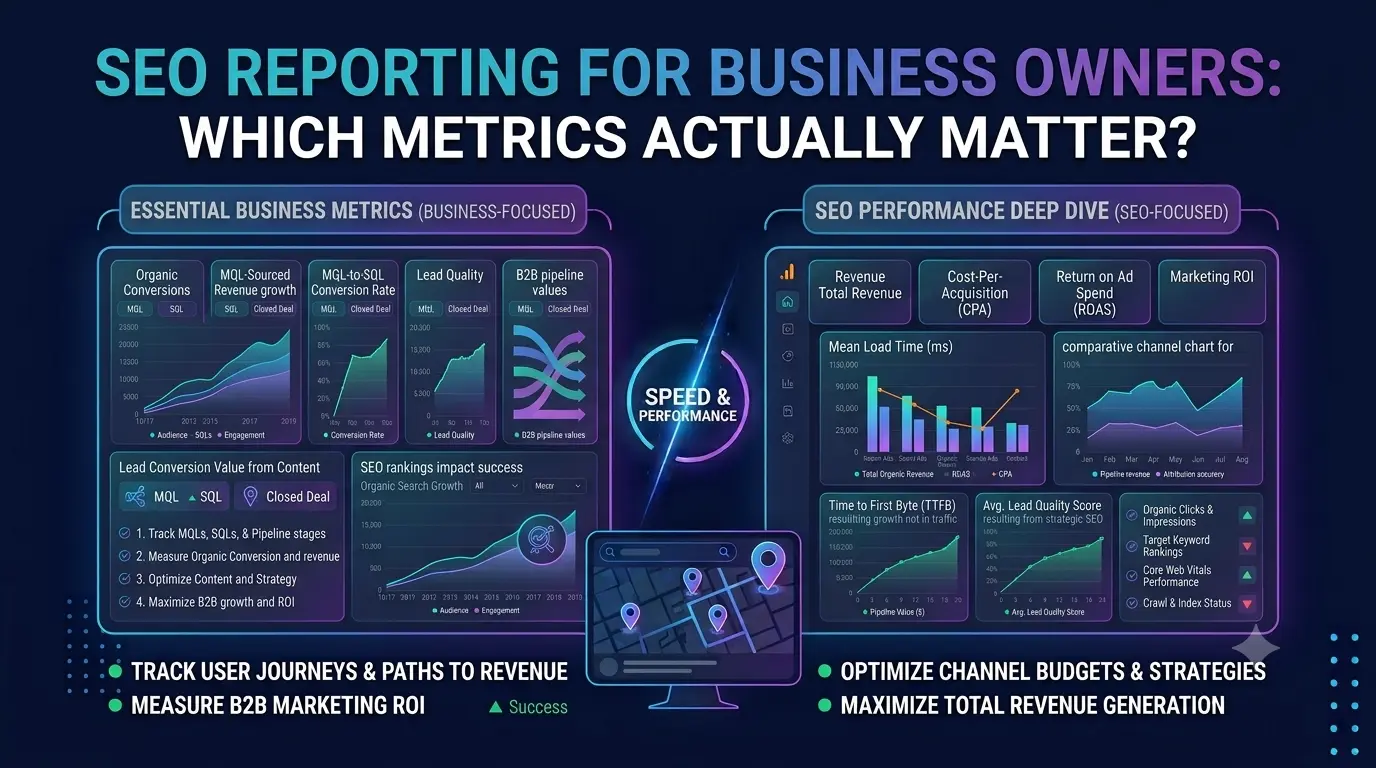
The SEO metrics that actually matter for a business owner are the ones that connect to real outcomes: organic traffic (are more of the right people finding the site), keyword rankings for terms that reflect genuine purchase intent (not just any keyword), and organic conversions or leads (is that traffic actually turning into business). Everything else in a typical SEO report is either supporting diagnostic detail or a vanity metric that looks productive without necessarily meaning anything for the business.
The core metrics worth tracking
- Organic traffic — how many visitors are arriving through unpaid search, and whether that trend is moving in the right direction over time.
- Organic conversions or leads — the number of visitors from organic search who actually took a meaningful action, which is ultimately more important than traffic volume alone.
- Keyword rankings for business-relevant terms — tracking rankings specifically for terms tied to real purchase or research intent, not a broad, unfiltered list of every keyword the site happens to rank for.
- Click-through rate from search results — how often people click through when your page appears in results, which reflects how compelling your titles and descriptions actually are.
- Organic revenue or pipeline value, where trackable — the clearest possible connection between SEO and actual business impact.
Why raw ranking counts and impressions can mislead
A report showing “500 keywords ranking” or “10,000 impressions” sounds productive, but neither number says anything about whether the right people are finding the site or whether they’re converting once they arrive. These figures are easy to produce and can genuinely be useful diagnostic detail, but presented without traffic and conversion context, they can make a underperforming SEO program look successful, or a genuinely effective one look unremarkable.
Setting realistic expectations for trend, not snapshots
SEO metrics — especially rankings — fluctuate naturally, and a single week’s dip or spike rarely reflects anything meaningful on its own. What actually matters is the trend across weeks and months, and whether traffic, rankings, and conversions are moving together in a coherent direction. This connects directly to setting realistic timeline expectations for SEO — short-term noise is normal, and judging a program on any single data point tends to produce a distorted read.
A simple monthly reporting structure
| Section | What it should show |
|---|---|
| Traffic trend | Organic visitors over time, month over month and versus the prior period |
| Ranking trend | Movement on business-relevant target keywords, not the full long tail |
| Conversion trend | Organic leads or conversions, tied to traffic to show the full funnel |
| Notable changes | Any algorithm updates, technical fixes, or major content additions that explain shifts |
How this connects to broader measurement
SEO reporting should ultimately feed into the same broader picture used for measuring digital marketing ROI and attribution across all channels — an SEO report that lives entirely separate from how the rest of marketing performance is measured makes it harder to compare SEO’s real contribution against other channels honestly.
Common mistakes in SEO reporting
- Leading with vanity metrics (total keywords, raw impressions) instead of traffic and conversion trends.
- Reacting to short-term ranking fluctuations as if they were meaningful signals on their own.
- Reporting rankings for keywords with no real business relevance, inflating apparent progress without real impact.
- Never connecting SEO metrics to actual leads or revenue, leaving the business unable to judge real ROI from the report alone.
The bottom line
A useful SEO report for a business owner doesn’t need forty tabs of data — it needs a small, honest set of metrics that actually reflect whether SEO is working: organic traffic trending the right direction, rankings on terms that genuinely matter to the business, and conversions showing that traffic is translating into real leads. Everything else is supporting detail, useful for diagnosis but not the headline story of whether the investment is paying off.
Frequently asked questions
Is keyword ranking the most important SEO metric?
It's a useful diagnostic signal, but not the most important metric on its own. A keyword can rank well and generate very little real business value if it doesn't reflect genuine purchase intent, or generate real value while ranking outside the top position, since traffic and conversions ultimately matter more than position alone.
How often should I review an SEO report?
Monthly is reasonable for most businesses, since SEO moves more slowly than paid channels and short-term weekly fluctuations are often just noise. A quarterly view is often more useful for judging genuine trend direction rather than reacting to normal short-term variation.
What's the difference between organic traffic and organic leads?
Organic traffic measures how many visitors arrive through unpaid search results; organic leads measures how many of those visitors actually took a meaningful business action. A site can have growing traffic and flat leads if the traffic isn't matched to real business intent, which is why both need to be tracked together, not traffic alone.
Should I be worried if rankings fluctuate week to week?
Generally no — normal ranking fluctuation happens constantly and doesn't necessarily reflect a real problem. What matters more is the trend over weeks and months, and whether it lines up with actual traffic and conversion trends, not any single week's snapshot.
What's the biggest mistake in SEO reporting?
Reporting on metrics that are easy to pull but don't connect to real business outcomes — total keywords tracked, raw impressions, or vanity ranking counts — without also showing whether any of it is translating into actual traffic, leads, or revenue.
More insights

Digital Marketing Strategy
How to Measure Digital Marketing ROI: Metrics Every Business Should Track
Traffic, impressions, and likes are easy to report and rarely tell you whether marketing is actually working. Here's what to measure instead.
Read Article
Digital Marketing Strategy
Marketing Attribution Explained: How to Know Which Channels Drive Revenue
The channel that gets the last click before a sale isn't necessarily the channel that actually drove the decision. Attribution is how you find out which one really did.
Read Article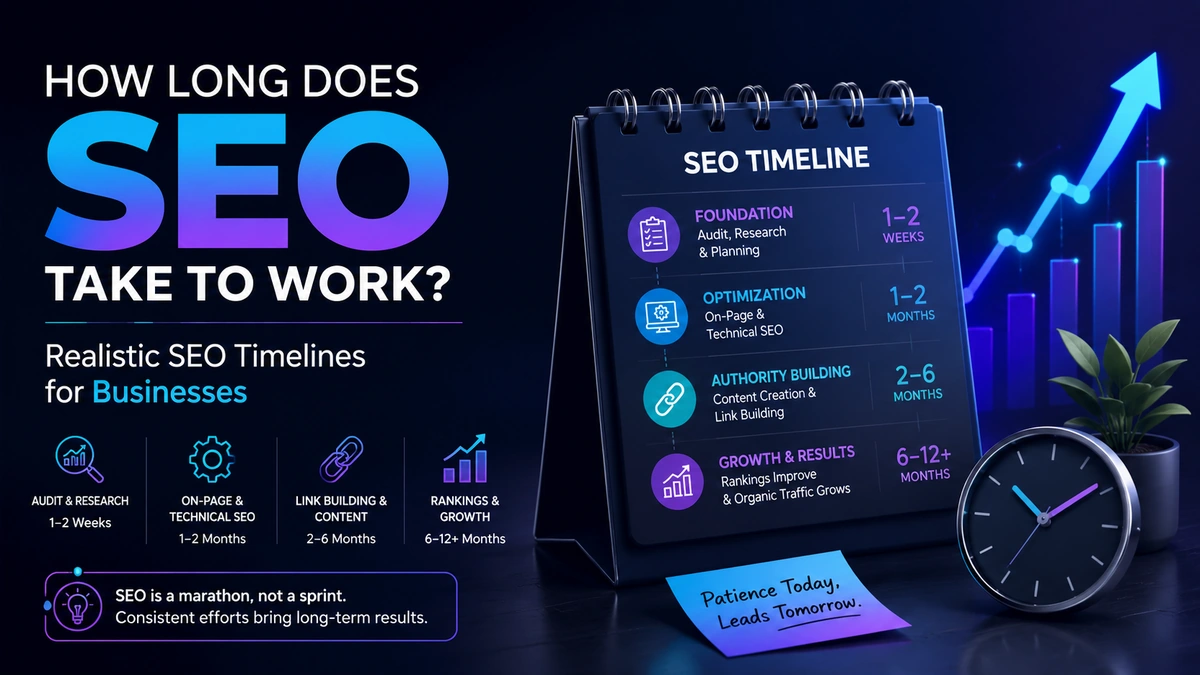
SEO
How Long Does SEO Take to Work? Realistic SEO Timelines for Businesses
Google's own guidance puts SEO results at four months to a year. Here's what actually happens in that window, month by month, and how to know if it's working.
Read Article